Your resume is your first interview. Make sure it says the right things before a recruiter ever reads it.
In today’s hiring landscape, submitting a resume is no longer enough. Recruiters receive hundreds of applications for every role, and most companies use Applicant Tracking Systems (ATS) to filter resumes before they reach a hiring manager. If your resume isn’t optimized with the right skills, keywords, and achievements, it may never be seen.
This is where AI is transforming the job search.
From writing compelling summaries to tailoring your resume for specific job descriptions, AI can help you create resumes that are clearer, stronger, and more relevant. But here’s the catch: AI is only as good as the prompts you give it.
At 7Seers, we help students become job-ready by combining AI-powered resume building, Job Readiness Insights, mock interviews, skill-gap analysis, and personalized career guidance. Instead of guessing what recruiters want, students can use AI strategically to build resumes that align with real industry expectations.
In this guide, we’ve compiled AI resume writing prompts that actually work—along with tips on how to make your resume stand out.
Why Your Resume Isn’t Getting Interviews
Many students believe they need more qualifications when, in reality, they need a better presentation of the qualifications they already have.
Common resume mistakes include:
- Generic professional summaries
- Weak project descriptions
- Missing ATS keywords
- No measurable achievements
- Poor formatting
- Listing skills that don’t match the job role
- Using the same resume for every application
The good news? AI can help fix every one of these problems.
Prompt 1: Create an ATS-Friendly Resume
If you’re starting from scratch, give AI enough context to build a structured resume.
Prompt:
Act as a technical recruiter hiring for software roles. Create a one-page ATS-friendly resume using my education, projects, internships, certifications, technical skills, and achievements. Use action verbs, quantify achievements wherever possible, and suggest improvements if information is missing.
This creates a professional foundation that can later be customized for specific jobs.
Prompt 2: Rewrite My Resume Like a Recruiter
Already have a resume?
Instead of asking AI to rewrite everything, ask it to review your resume from a recruiter’s perspective.
Prompt:
Review my resume as if you’re a recruiter. Rewrite weak bullet points, improve clarity, replace generic phrases with measurable achievements, and optimize it for ATS without adding false information.
This helps transform average descriptions into achievement-focused statements.
For example:
Instead of:
“Worked on a student management system.”
Write:
“Developed a web-based student management system using React and Node.js, improving record management efficiency through automated workflows.”
Prompt 3: Tailor My Resume to This Job Description
One of the biggest mistakes students make is sending the same resume to every company.
Use AI to customize it.
Prompt:
Compare my resume with this job description. Identify missing keywords, technical skills, and recruiter expectations. Rewrite my resume to improve ATS compatibility while keeping all information truthful.
This simple step can significantly improve your chances of getting shortlisted.
Prompt 4: Improve My Project Descriptions
Recruiters don’t just want to know what you built—they want to know why it matters.
Prompt:
Rewrite my project descriptions using action verbs, measurable impact, technologies used, and the problem solved. Keep each point concise and recruiter-friendly.
A stronger project section demonstrates both technical ability and problem-solving skills.
Prompt 5: Write a Professional Summary That Stands Out
Your professional summary should quickly answer one question:
Why should a recruiter keep reading?
Use this prompt:
Write a professional summary for a final-year engineering student applying for AI and software development roles. Highlight technical strengths, internship experience, problem-solving skills, and career aspirations in three concise sentences.
Avoid clichés like hardworking, passionate, or quick learner. Let your experience speak instead.
Prompt 6: Help Me Quantify My Achievements
Numbers make resumes more credible.
If your resume lacks measurable results, ask AI to identify opportunities.
Prompt:
Review my resume and suggest realistic ways to quantify achievements using percentages, project size, performance improvements, users served, or productivity gains.
For example:
Instead of:
“Improved application performance.”
Write:
“Reduced page load time by 38% through frontend optimization and API caching.”
Prompt 7: Find Everything Wrong With My Resume
Sometimes you don’t need AI to write—you need AI to critique.
Prompt:
Act as a senior recruiter reviewing hundreds of resumes every week. Identify formatting issues, weak language, missing keywords, readability problems, ATS concerns, grammar mistakes, and sections that need improvement.
Think of this as a free resume audit.
Prompt 8: Build a Strong Fresher Resume
Don’t underestimate academic experience.
Projects, hackathons, certifications, internships, leadership roles, volunteering, and student clubs all demonstrate valuable skills.
Prompt:
Rewrite my fresher resume to highlight transferable skills, technical projects, certifications, internships, and leadership experience without exaggerating my qualifications.
Recruiters hire potential—not just experience.
Prompt 9: Recommend Skills Recruiters Are Looking For
Many students include outdated or irrelevant skills on their resumes.
Instead, ask AI what’s currently in demand.
Prompt:
Based on my goal of becoming a Data Analyst, Full Stack Developer, Product Manager, or AI Engineer, recommend the most relevant technical skills, certifications, tools, and keywords recruiters expect in 2026.
Then compare those recommendations with your own profile and identify any skill gaps.
Prompt 10: Turn My Resume Into an Interview Guide
A good resume doesn’t just help you get shortlisted—it helps you prepare for interviews.
Use this prompt:
Based on my resume, generate the top 25 interview questions recruiters are likely to ask. Include strong sample answers and explain which experience each question relates to.
This bridges the gap between resume preparation and interview confidence.
Go Beyond AI Prompts with 7Seers
While AI prompts can improve how your resume is written, they can’t tell you whether you’re actually ready for the role.
That’s where 7Seers makes the difference.
Instead of only helping you write a better resume, 7Seers helps you build a stronger profile by identifying the skills employers expect and showing where you need to improve.
With 7Seers, students can:
- Build ATS-friendly resumes with AI assistance
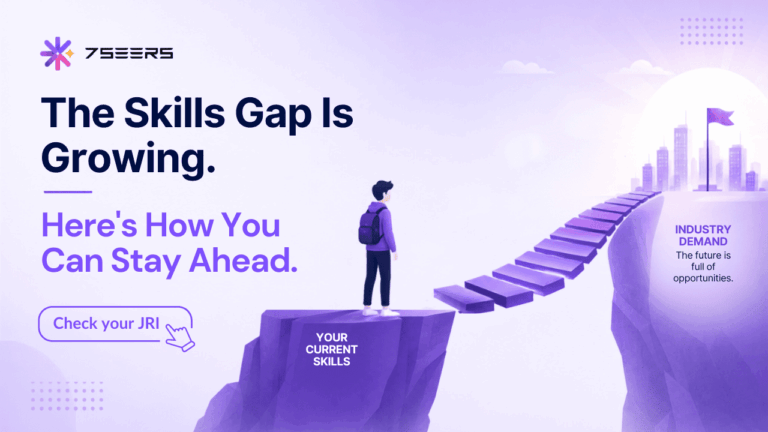
- Discover skill gaps based on target job roles
- Measure job readiness through the Job Readiness Index (JRI)
- Practice AI-powered mock interviews
- Explore curated job opportunities matched to their skills
- Receive personalized learning recommendations to improve employability
A great resume gets attention. A job-ready profile gets interviews.
Best Practices for Using AI in Resume Writing
Keep these principles in mind:
- Never fabricate projects, internships, or achievements.
- Tailor your resume for every application.
- Use measurable outcomes wherever possible.
- Prioritize relevant skills over lengthy descriptions.
- Keep your resume concise and easy to scan.
- Proofread every AI-generated suggestion before submitting.
Remember, AI should enhance your experience—not replace your authenticity.
Final Thoughts
AI has made resume writing faster, smarter, and more accessible than ever. But success doesn’t come from simply asking ChatGPT to “write my resume.”
It comes from asking the right questions, tailoring your resume to every opportunity, and continuously improving your skills.
That’s why the most successful job seekers don’t stop at resume writing—they prepare for the entire hiring journey.
With 7Seers, you can do exactly that.
From identifying skill gaps and building an ATS-friendly resume to practicing mock interviews and measuring your Job Readiness Index, 7Seers helps you move beyond creating a resume—it helps you become the candidate recruiters are looking for.