10 Best AI Tools for College Students in 2026
Blogs

10 Best AI Tools for College Students in 2026 

Artificial intelligence is changing how college students learn, work, create, and prepare for their careers.  From understanding difficult concepts and researching assignments to writing code, creating presentations, organizing notes, building resumes, and practicing interviews, AI tools for college students are becoming part of everyday student life.  But there is an important difference between using AI to complete your work and using AI to improve your ability to do the work.  The second one matters much more.  In 2026, students don’t necessarily need dozens of AI applications. They need the right AI tools for the right tasks.  This guide covers some of the best AI tools for students in 2026, including tools for studying, research, writing, coding, productivity, creativity, and career preparation.  Why Should College Students Use AI Tools in 2026?  College students today are expected to do much more than attend classes and pass examinations.  They need to:  AI can help students manage many of these activities more efficiently.  However, AI should be treated as a learning and productivity assistant, not a replacement for critical thinking or genuine skill development.  The most effective approach is:  Learn → Practice → Measure → Improve  With that in mind, let’s look at the best AI tools college students can explore in 2026.  1. ChatGPT – Best Overall AI Tool for Students  ChatGPT is one of the most versatile AI tools for college students.  Students can use it as a tutor, brainstorming partner, writing assistant, coding assistant, and interview practice tool.  What can students use ChatGPT for?  The key is how you use it.  Instead of asking:  “Explain digital marketing.”  Try:  Explain digital marketing to a second-year college student using three real-world examples. Then ask me five questions to test my understanding. The second prompt turns AI into an interactive study tool.  Best for: Learning, brainstorming, writing, coding, and exam preparation.  2. Google Gemini – Best for Learning and Productivity  Google Gemini is another useful AI assistant for students.  It can help with research, brainstorming, writing, explanations, and productivity tasks.  Students can use Gemini to:  For students already using Google’s ecosystem, Gemini can also fit naturally into existing workflows.  Best for: General learning, research, writing, and productivity.  3. Perplexity – Best AI Tool for Research  Research is an important part of college life.  Whether you’re preparing an assignment, business case, presentation, dissertation, or final-year project, finding reliable information can take significant time.  Perplexity can help students explore topics using AI-powered search while providing sources for further investigation.  Students can use it for:  However, students should always verify important information against the original source.  Think of AI as your research assistant, not your final authority.  Best for: Research and information discovery.  4. NotebookLM – Best AI Study Tool for Notes and PDFs  Students often have lecture notes, PDFs, research papers, presentations, and other study material scattered across different platforms.  NotebookLM can help students interact with their own documents and study material.  You can use it to:  This makes it particularly useful when you have a large amount of material to revise.  Instead of asking:  “Explain this subject.”  You can ask questions based on your actual course material.  Best for: Study notes, PDFs, revision, and exam preparation.  5. Canva AI – Best for Presentations and Visual Content  College students create presentations all the time.  From semester projects and business plans to college events, competitions, and internship assignments, presentation skills are becoming increasingly important.  Canva can help students create:  AI-powered features can also speed up parts of the design process.  But remember:  Good presentation design isn’t about adding more graphics.  It’s about making your idea easier to understand.  Best for: Presentations, design, visual content, and student projects.  6. Grammarly – Best AI Writing Tool for Students  Communication skills matter even before students enter the workplace.  College students write:  Grammarly can help improve grammar, clarity, sentence structure, and tone.  However, don’t simply accept every AI suggestion.  Understand why the sentence was changed.  The goal is to become a better communicator—not permanently depend on an AI writing assistant.  Best for: Writing, grammar, professional communication, and applications.  7. GitHub Copilot – Best AI Coding Tool for Students  For computer science, engineering, and IT students, AI coding tools are becoming increasingly relevant.  GitHub Copilot can help students:  But there’s one important rule:  Never submit code you don’t understand.  Use the following approach:  Generate → Understand → Modify → Test  If AI generates a function, ask it to explain the logic.  Then modify it.  Then test it.  That’s how AI becomes a coding tutor instead of a shortcut.  Best for: Programming, coding projects, debugging, and learning software development.  8. Notion AI – Best AI Productivity Tool for Students  College life involves more than studying.  Students are managing:  Notion can help students organize these activities.  A student dashboard could include:  Academic deadlines  Project tasks  Internship applications  Skills to learn  Weekly goals  AI features can then help summarize, organize, and work with your information.  Best for: Productivity, notes, project management, and organization.  9. Claude – Best for Analysis and Long-Form Work  Claude can be useful when students need help understanding, analyzing, or working through larger amounts of text.  Students can explore it for:  Like other AI tools, it should be used as an assistant rather than a replacement for independent thinking.  Best for: Analysis, writing, brainstorming, and complex explanations.  10. 7Seers – Best AI Tool for Student Career Readiness  Most AI tools help students learn, research, write, or create.  But there’s another question students need to answer:  “Am I actually ready for the job I want?”  That’s where 7Seers comes in.  7Seers is designed around student job readiness and career preparation.  Students can use the platform to work on areas including:  It can also support students through:  This makes 7Seers different from a general AI productivity tool.  The objective isn’t simply to help students finish their next assignment.  It’s to help them answer:  “What skills do I need to improve before I enter the job market?”  Best for: Career preparation, campus placements, job
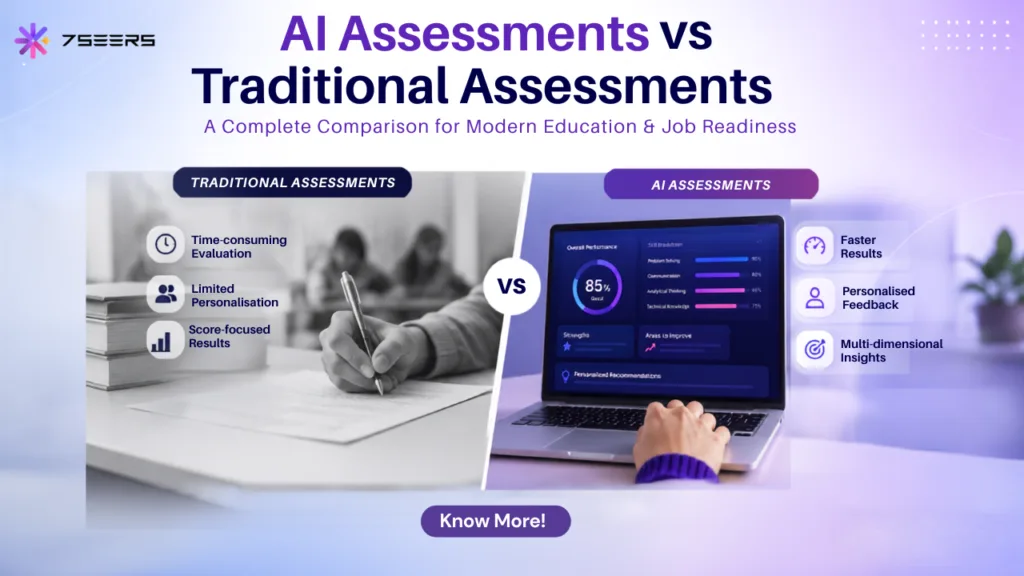
Traditional Assessments vs AI Assessments: Which Approach Works Better?
Blogs

Traditional Assessments vs AI Assessments: Which Approach Works Better in Higher Education?

Assessments have always been an important part of education. They help teachers understand whether students have understood a concept, identify areas where they are struggling, and measure their progress over time. For students, assessments provide a way to understand what they know, what they need to improve, and how prepared they are for the next stage of learning. For decades, traditional assessments were the standard approach. Students would sit in classrooms, answer questions on paper and submit their work for teachers or professors to evaluate manually. This method remains widely used because it is familiar, structured and relatively straightforward. However, education is changing. With artificial intelligence entering classrooms, learning platforms and assessment systems, the way students are tested is also evolving. AI can automate parts of the assessment process, provide faster feedback, analyse performance across multiple metrics and create more personalised learning experiences. As AI assessments become increasingly common in higher education, institutions are rethinking how they evaluate student learning, job readiness, and employability alongside traditional assessment methods. This does not mean traditional assessments have become irrelevant. Instead, it raises a more useful question: when should institutions use traditional assessments, and when can AI-powered assessments provide additional value? What Are AI Assessments? AI assessments use artificial intelligence to evaluate student performance, provide personalized feedback, identify skill gaps, and measure competencies beyond traditional exam scores. They help institutions improve learning outcomes, job readiness, and employability through continuous assessment. What Are Traditional Assessments? Traditional assessments are evaluation methods where students are generally assessed through structured tests, assignments, examinations, presentations, or other activities that are designed and evaluated through conventional methods. The most familiar example is the paper-and-pen examination. A teacher prepares the questions, students complete the examination, and the answers are then checked manually. Depending on the assessment, the teacher may award marks, provide comments, or identify areas where the student needs improvement. Traditional assessments have been used for a long time because they provide a structured way to evaluate academic knowledge. They are particularly effective when institutions need to test whether students understand specific concepts or have achieved defined learning outcomes. However, manual evaluation becomes increasingly difficult as student numbers grow. Checking hundreds of answer sheets, maintaining records, and comparing performance across different assessments requires considerable time and effort. Traditional assessment methods also tend to provide a snapshot of performance. A student may know their score after an examination, but understanding why they received that score and what they should work on next may require additional feedback from a teacher. Advantages of Traditional Assessments Traditional assessments continue to have several important advantages. 1. Human Judgement Teachers can consider context while evaluating a student’s work. In essays, presentations and subjective assignments, human judgement can be particularly valuable because the evaluator can understand nuances that a purely automated system may miss. 2. Familiar and Easy to Implement Students, teachers and institutions are already familiar with traditional examinations. Universities have established processes for creating question papers, conducting examinations and maintaining records, making the system relatively easy to understand. 3. Useful for Academic Knowledge Traditional assessments work well when the objective is to measure subject knowledge, theoretical understanding and the ability to apply concepts in a structured academic setting. 4. Direct Interaction Between Educator and Student When teachers evaluate student work, they can identify recurring mistakes and use those observations to guide classroom teaching. This human interaction remains an important part of education. The Rise of AI Assessments in Education Artificial intelligence is changing how many parts of education are delivered, from personalised learning to feedback and evaluation. AI can analyse large amounts of student performance data, identify patterns and generate feedback much faster than manual systems, where AI is also enabling new approaches to adaptive learning, blended learning, active learning and personalised feedback. You can explore these approaches in our guide to Innovative Teaching Methods in the Age of AI This is part of a broader transformation in teaching. AI-enabled approaches can support adaptive learning, blended learning, project-based learning and personalised feedback, allowing educators to use technology not simply to automate existing processes but to create more targeted learning experiences. Assessment is naturally becoming part of this transformation. An AI-powered assessment can evaluate responses, analyse performance across multiple dimensions and provide feedback soon after the assessment is completed. Instead of looking only at the final score, institutions can potentially examine patterns such as accuracy, topic-wise performance, time taken, competency-level performance and improvement over multiple attempts. This creates an important shift: Traditional assessment often asks, “What did the student score?” AI-powered assessment can also ask, “What does this performance tell us about the student’s skills and what should happen next?” Advantages of AI Assessments AI assessments offer several advantages, particularly when institutions are dealing with large student populations or need continuous performance insights. 1. Less Manual Error Manual evaluation can involve inconsistencies, especially when large numbers of responses need to be checked. Automated systems can apply the same predefined evaluation criteria across responses, reducing certain types of human error. That said, AI systems are not automatically error-free. Their accuracy depends on how the system is designed, trained, and validated. Human oversight remains important, especially for subjective or high-stakes assessments. 2. Faster Results One of the biggest advantages is speed. A manually evaluated assessment may take hours or days before students receive their results. AI-powered systems can process many responses much faster, allowing students to identify areas for improvement while the assessment is still fresh in their minds. 3. Better Performance Metrics Traditional assessments often centre around a final score. AI systems can potentially analyse multiple dimensions of performance. For example, an assessment can provide insights into specific competencies, identify weaker areas and compare performance across different attempts. This makes the assessment more useful as a diagnostic tool rather than simply a grading mechanism. 4. Flexibility AI assessments can be delivered digitally, allowing students to complete assessments from different locations and at different times, depending on the institution’s requirements. This flexibility becomes particularly useful for

How to Build a Placement Dashboard for Your Institution?
Blogs

How to Build a Placement Dashboard for Your Institution

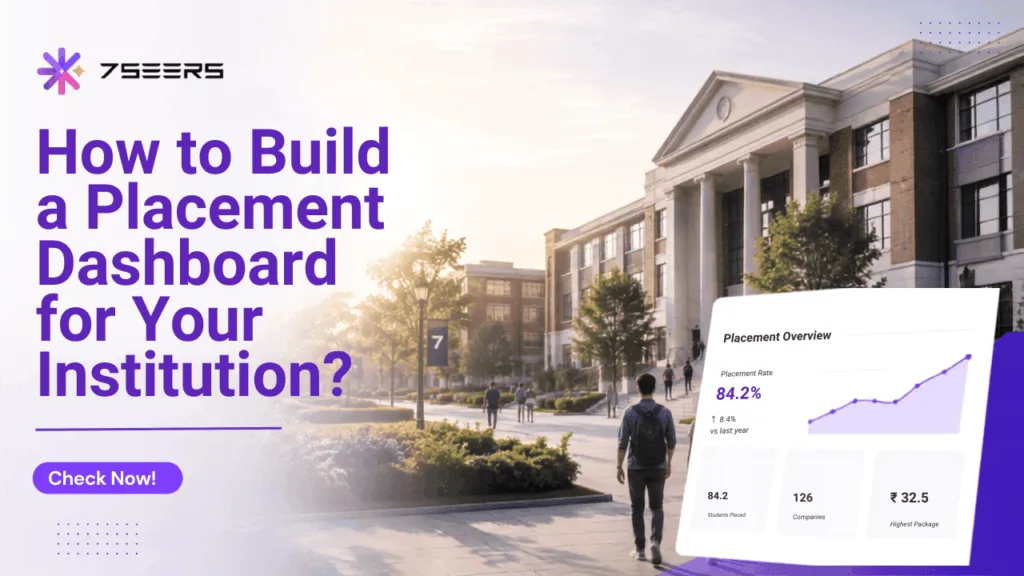
Every year, placement season brings a mix of excitement and pressure for higher education institutions. Students prepare for interviews, recruiters visit campuses, and Training & Placement Officers (TPOs) work tirelessly to coordinate the entire process. Behind the scenes, however, many institutions are still managing placements using spreadsheets, manual reports, and countless follow-up calls. For years, Excel sheets have been the backbone of placement management. Student details, eligibility criteria, company applications, interview status, and placement records are often spread across multiple files. While this approach may have worked in the past, today’s placement landscape demands something much more efficient. Recruiters expect faster responses. Students expect continuous guidance. Management expects better placement outcomes. At the same time, institutions are handling larger student batches, multiple recruiters, and increasing competition. Managing all of this manually is no longer sustainable. This is where a Placement Dashboard becomes essential. A placement dashboard is not just another reporting tool. It gives institutions a single source of truth for everything related to placements. Instead of searching through multiple spreadsheets or requesting updates from different departments, TPOs and institutional leadership can instantly understand where students stand, identify challenges early, and make informed decisions. The goal is simple: replace reactive placement management with proactive placement planning. Why Manual Placement Tracking No Longer Works Imagine managing placements for 800 or even 2,000 students. Every student has a different resume, different skills, different aspirations, different internship experience, and different levels of placement readiness; now imagine maintaining all this information manually. One Excel sheet contains eligible students, another tracks company applications, and a third records aptitude scores. Someone else maintains interview feedback, and department-wise placement reports are stored separately. Before long, data becomes scattered, outdated, and difficult to interpret. The challenge isn’t that institutions lack data; the challenge is that the data exists in too many places. When recruiters ask for eligible students, TPOs often spend hours verifying records; when management asks about placement readiness, there is no single answer. When students ask where they need improvement, institutions struggle to provide personalised guidance. The result is that everyone spends more time managing information than improving student outcomes. A placement dashboard solves this problem by bringing everything together in one place. Why Placement Dashboards Are Becoming a Necessity Placement outcomes today influence much more than recruitment. For prospective students and parents, placement records have become one of the biggest deciding factors while selecting a college. Recruiters evaluate institutions based on the quality of candidates they receive, and management teams use placement performance as an important indicator of institutional success. Accreditation bodies are also placing greater emphasis on measurable student outcomes rather than simply evaluating infrastructure or curriculum. This means placement data is no longer useful only during recruitment season; it becomes valuable throughout the academic year. Institutions need continuous visibility into how students are progressing, where they need support, and whether current initiatives are actually improving employability. A placement dashboard makes this possible; rather than waiting until companies begin hiring, institutions can continuously monitor student readiness and take timely action. What Should an Ideal Placement Dashboard Include? An effective placement dashboard goes far beyond showing the number of students placed. It should provide meaningful insights that help institutions improve outcomes throughout the year. One of the most important metrics is the total number of eligible students. Knowing how many students are eligible for placements helps institutions understand the size of the recruitment pool and identify students who still need academic or skill-based improvements before they qualify. The dashboard should also display the number of companies participating in campus placements, along with details such as hiring roles, eligibility criteria, compensation offered, and recruitment status. This helps TPOs plan recruitment activities more efficiently and identify gaps in recruiter engagement. Another important section is student-wise placement status. Rather than simply recording whether a student is placed or not, institutions should be able to see where every student is within the placement journey. For example: Having this level of visibility enables TPOs to identify students who require immediate attention. A modern dashboard should also include department-wise placement performance. This allows management to compare placement readiness across departments, identify stronger performing batches, and understand where additional support may be required. Similarly, company-wise hiring reports become valuable for analysing recruiter engagement over time. Institutions can identify which recruiters return every year, which companies have higher selection rates, and where stronger industry relationships can be built. Measuring Readiness Instead of Waiting for Results Perhaps the biggest limitation of traditional placement tracking is that it measures results after everything has already happened. It tells institutions how many students received offers; it rarely explains why other students did not. This is where readiness metrics become far more valuable. Instead of waiting for placement season, institutions should continuously monitor indicators such as: Together, these metrics create a much clearer picture of employability. Rather than relying on assumptions, institutions can understand exactly where students require intervention. As discussed in our blog on Skill Gap Analysis for Colleges, identifying student skill gaps early allows universities to provide targeted mentoring instead of generic placement training. When institutions know where students are struggling, they can deliver the right support at the right time, significantly improving placement readiness. Similarly, assessments themselves are evolving rapidly in today’s AI-driven world. As we explored in Assessments in the Age of AI: Rethinking Evaluation for Higher Education, modern assessments are no longer just about testing theoretical knowledge. They help institutions evaluate practical skills, problem-solving abilities, and real-world readiness, making them far more relevant for today’s recruiters. A Placement Dashboard Is More Than Just a Reporting Tool Many institutions think of dashboards as visual reports. In reality, they are decision-making tools. A good dashboard helps TPOs identify which students need support before placements begin; it helps department heads understand how their students are progressing; it enables management to evaluate whether placement initiatives are delivering measurable results. Most importantly, it ensures that every stakeholder works with the same information instead of relying on multiple

Job Readiness Dashboard
Blogs

Why Every Vice Chancellor Needs a Campus-Wide Job Readiness Dashboard?

Every Vice Chancellor shares the goal of building an institution that prepares students not just to graduate but to succeed. Success, however, is no longer measured only by academic excellence. Today, students choose universities based on career outcomes. Parents evaluate institutions by placement records. Recruiters return to campuses where they consistently find industry-ready talent. Accreditation bodies increasingly look beyond infrastructure and curriculum to understand how effectively institutions prepare students for employment. In this environment, one question has become more important than ever: Do we really know how job-ready our students are? For many universities, the honest answer is not entirely. Leadership teams receive detailed reports throughout the year: academic performance, attendance, examination results, placement statistics, internship participation, and accreditation updates. While these reports are valuable, they only present fragments of a much larger picture. They tell us what has happened. They rarely tell us what is happening right now. More importantly, they don’t tell us what needs to change before the next placement season begins. That is where a campus-wide Job Readiness Dashboard becomes essential. Placements Are an Outcome. Job Readiness Is the Journey. Most universities celebrate placements as the final milestone of a student’s academic journey. But placements don’t happen overnight. They are the result of months or even years of preparation. A student who confidently clears interviews has likely developed strong communication skills, technical knowledge, problem-solving abilities, aptitude, and professional confidence over time. On the other hand, students who struggle during recruitment often don’t lack potential. They simply haven’t been able to identify where they need improvement early enough. Unfortunately, many institutions only discover these gaps after recruiters provide feedback or when placement numbers fall short of expectations. By then, the opportunity to intervene has already passed. Imagine if leadership could identify these gaps six months before campus hiring begins. Imagine knowing which departments need additional support, which students require interview practice, or which batches need stronger aptitude training. Those insights can fundamentally change placement outcomes. Universities Don’t Have a Data Problem Over the years, universities have invested significantly in digital systems from Student Information Systems and Learning Management Systems to examination portals, attendance software, placement databases, and assessment platforms. Every department generates data, every faculty member contributes information, and every student interaction leaves a digital footprint. Yet despite having more data than ever before, many leadership teams still struggle to answer one fundamental question: How prepared are our students for the jobs they’re aspiring to? The challenge isn’t a lack of information. In fact, universities have an abundance of it. The real problem is that this information exists in silos. Academic departments measure grades, placement cells track recruiter engagement, faculty monitor classroom performance, and career services organize workshops and training sessions. Each department has its own reports, dashboards, and spreadsheets, but these rarely come together to provide a complete picture of student readiness. What universities often lack is a single, institution-wide view that connects these insights into meaningful, actionable intelligence. Leadership doesn’t need more reports; it needs better visibility. Only then can institutions make informed decisions that improve student outcomes before placement season begins. Why Measuring Job Readiness Matters More Than Measuring Placements One of the biggest misconceptions in higher education is treating placements as the primary measure of institutional success. Placements certainly matter, but placement numbers alone don’t explain whether students were genuinely prepared or simply benefited from market conditions. A university may achieve strong placements one year because the hiring market is favourable. The following year, hiring slows down, recruiter expectations evolve, and suddenly placement percentages decline. Was the problem the economy? The recruiters? Or were students simply not equipped with the skills industry expected? Without measuring job readiness, it’s impossible to know. This is exactly why more institutions are beginning to shift their focus from placement statistics to employability indicators. In fact, we explored this changing mindset in our blog, “Why Job Readiness Is the New Metric of Institutional Success.” The article discusses why universities that continuously measure employability are better positioned to improve student outcomes than those that only evaluate final placement numbers. Because ultimately, placements are the result, and job readiness is the process, and improving the process almost always improves the outcome. You Can’t Improve What You Don’t Measure Every successful institution believes in continuous improvement. Curricula evolve, teaching methods become more effective, infrastructure expands, and faculty development remains an ongoing priority. However, when it comes to employability, many institutions still rely on assumptions. Students attend workshops, complete certifications, and participate in mock interviews, but an important question often remains unanswered: Are these initiatives actually making students more job-ready? Without measurement, improvement becomes guesswork. Universities may invest significant time and resources into career development programs without knowing which initiatives are delivering measurable outcomes. This is where skill-gap analysis becomes invaluable. Rather than assuming students are prepared, institutions can identify exactly where support is needed. Are communication skills improving? Are students struggling with aptitude? Do their technical skills align with industry expectations? Which departments consistently produce more job-ready graduates? Most importantly, which students need intervention before placement season begins? Answering these questions enables universities to move from reactive planning to proactive decision-making. As we discussed in our blog, “Skill Gap Analysis for Colleges,“ identifying where students are falling behind is the first step towards helping them improve. Once these gaps are visible, institutions can introduce targeted mentoring, additional assessments, AI mock interviews, or specialised training that addresses specific challenges rather than applying the same solution to every student. Every Student Doesn’t Need the Same Support One of the biggest challenges for large universities is that every student has a different learning journey. Even two students enrolled in the same programme may require completely different guidance. One student may possess strong technical knowledge but struggle to communicate confidently during interviews, while another may communicate exceptionally well but need additional support with aptitude or domain-specific skills. Some students require help building an impactful resume; others need coding practice, exposure to real-world projects, or

Blogs

Why University Leadership Needs Real-Time Student Intelligence?

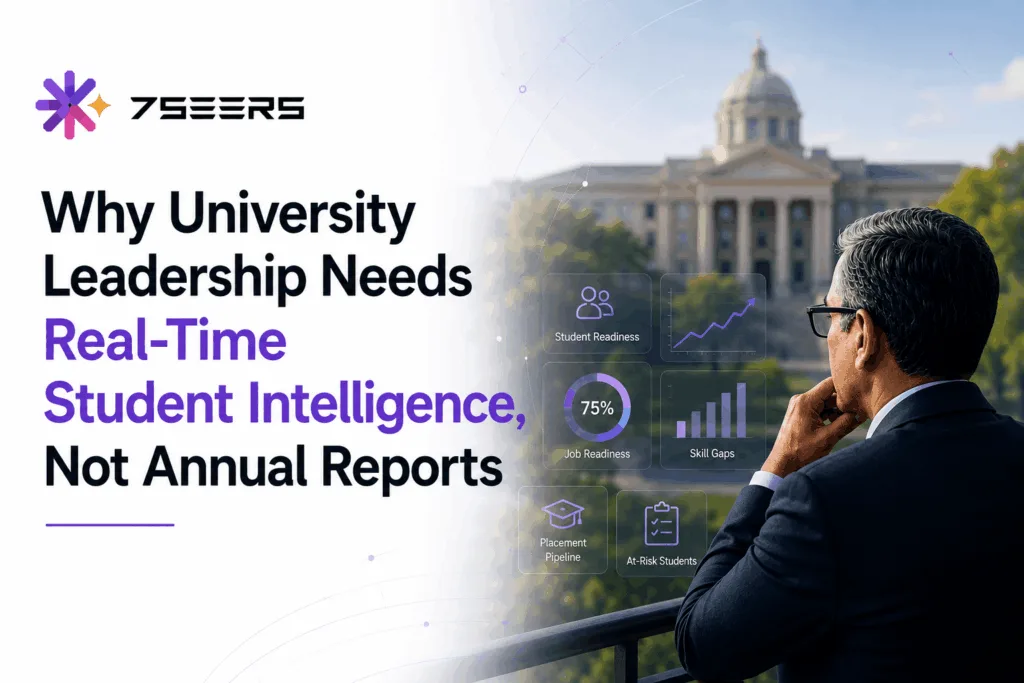
Universities have always relied on reports to make important decisions, like placement reports, accreditation reports, student performance reports, NAAC documentation, and annual employability reports. But here’s the problem. By the time most institutions receive these reports, the opportunity to act has already passed. If a student’s communication skills were weak in August, discovering it in the annual placement report next April doesn’t help anyone. If a department had low employability scores throughout the semester, identifying it after campus placements are over won’t improve placement outcomes. Higher education is changing rapidly. Student expectations are changing. Recruiter expectations are changing. Technology is changing. The way institutions make decisions has to change too. The future doesn’t belong to institutions that simply collect data. It belongs to institutions that can act on data in real time. The Problem with Annual Reports Annual reports have always served an important purpose. They help institutions understand what happened over the past year; they support accreditation; they provide management with performance summaries; they assist in compliance. But annual reports answer only one question: “What happened?” What university leadership really needs is answers to questions like: Waiting until the end of the academic year to discover these answers is no longer practical. Universities Don’t Have a Data Problem. They Have a Visibility Problem. Most universities already collect enormous amounts of student data. Attendance, internal assessments, semester marks, assignment scores, placement registrations, resume submissions, workshop participation, certification records. The challenge isn’t the lack of information. The challenge is that this information exists in different systems and rarely translates into meaningful insights. Leadership teams often receive hundreds of pages of reports without getting clear answers to simple questions like: Are our students actually becoming industry-ready? Why Real-Time Student Intelligence Matters Imagine if university leadership could see: Instead of reacting after placements, institutions could intervene while there is still time. This shift changes the role of leadership. Instead of reviewing history, they begin shaping outcomes. The Cost of Delayed Decisions Small problems become large problems when they go unnoticed. Consider a student preparing for placements. Without regular feedback, they may continue making the same mistakes in interviews for months. A department may believe students are industry-ready simply because academic performance is good. Recruiters may reject candidates due to poor communication, lack of confidence, or weak problem-solving skills areas traditional academic reports rarely measure. When these gaps are identified only after campus hiring, institutions lose valuable opportunities to improve outcomes. AI Is Changing How Universities Measure Student Readiness Artificial Intelligence is no longer limited to automating administrative tasks. It is helping universities understand student preparedness continuously. Instead of waiting for annual reports, AI can provide ongoing insights into: This enables educators to support students throughout their journey rather than only during placement season. In fact, AI is also helping institutions identify placement risks months before recruiter visits. If you’re interested in learning how predictive analytics is transforming placement preparation, read our blog: How AI Helps TPOs Predict Placement Risks Before Campus Hiring Begins Student Intelligence Is More Than Academic Performance A student with excellent grades may still struggle in interviews. Similarly, an average academic performer may become an outstanding employee because of strong communication, adaptability, and problem-solving abilities. Employers increasingly evaluate: These indicators rarely appear in conventional academic reports. Real-time student intelligence bridges this gap. It gives institutions a broader understanding of student development beyond classroom performance. Leadership Needs Dashboards, Not Documents Modern university leadership doesn’t have time to review lengthy reports every month. What they need are clear, actionable dashboards that answer questions instantly. Imagine opening a dashboard and immediately knowing: Instead of spending weeks preparing reports, leadership can focus on improving student outcomes. Better Visibility Creates Better Student Outcomes Real-time intelligence benefits everyone. University Leadership TPOs Faculty Students Everyone works from the same source of truth. Measuring Employability Is Becoming a Competitive Advantage Students today don’t choose universities based only on infrastructure or rankings. Increasingly, they ask: Universities that continuously measure employability can answer these questions with confidence. If you’re exploring how AI can help institutions measure employability more effectively, we recommend reading: Student Job Readiness in India: How Universities Can Measure Employability Using AI From Reactive Leadership to Predictive Leadership Traditional reporting tells leadership what happened. Real-time intelligence tells leadership what needs attention today. Predictive intelligence tells leadership what may happen tomorrow. That shift changes everything. Instead of responding to placement challenges, universities begin preventing them. Instead of discovering skill gaps after recruiter feedback, they identify them months earlier. Instead of measuring success once a year, they improve it every day. How 7Seers Helps Universities Make Better Decisions At 7Seers, we believe institutions shouldn’t have to wait for annual reports to understand student readiness. Our AI-powered platform provides universities with continuous insights into student employability through: This enables leadership teams, TPOs, and faculty members to make informed decisions that improve student outcomes before placement season begins. Learn more about how we’re helping institutions build industry-ready graduates: Final Thoughts Higher education is entering an era where decisions need to happen faster than ever. Annual reports will always remain important for governance and compliance, but they shouldn’t be the primary tool for understanding student readiness. Real-time student intelligence enables institutions to move from measuring performance to improving it. And when universities act earlier, students graduate with greater confidence, stronger skills, and better career opportunities because the goal isn’t simply to review the past. It’s to shape the future.

AI Resume Writing Prompts that Actually
Blogs

AI Resume Writing Prompts That Actually Work  

Your resume is your first interview. Make sure it says the right things before a recruiter ever reads it.  In today’s hiring landscape, submitting a resume is no longer enough. Recruiters receive hundreds of applications for every role, and most companies use Applicant Tracking Systems (ATS) to filter resumes before they reach a hiring manager. If your resume isn’t optimized with the right skills, keywords, and achievements, it may never be seen.  This is where AI is transforming the job search.  From writing compelling summaries to tailoring your resume for specific job descriptions, AI can help you create resumes that are clearer, stronger, and more relevant. But here’s the catch: AI is only as good as the prompts you give it.  At 7Seers, we help students become job-ready by combining AI-powered resume building, Job Readiness Insights, mock interviews, skill-gap analysis, and personalized career guidance. Instead of guessing what recruiters want, students can use AI strategically to build resumes that align with real industry expectations.  In this guide, we’ve compiled AI resume writing prompts that actually work—along with tips on how to make your resume stand out.  Why Your Resume Isn’t Getting Interviews  Many students believe they need more qualifications when, in reality, they need a better presentation of the qualifications they already have.  Common resume mistakes include:  The good news? AI can help fix every one of these problems.  Prompt 1: Create an ATS-Friendly Resume  If you’re starting from scratch, give AI enough context to build a structured resume.  Prompt:  Act as a technical recruiter hiring for software roles. Create a one-page ATS-friendly resume using my education, projects, internships, certifications, technical skills, and achievements. Use action verbs, quantify achievements wherever possible, and suggest improvements if information is missing.  This creates a professional foundation that can later be customized for specific jobs.  Prompt 2: Rewrite My Resume Like a Recruiter  Already have a resume?  Instead of asking AI to rewrite everything, ask it to review your resume from a recruiter’s perspective.  Prompt:  Review my resume as if you’re a recruiter. Rewrite weak bullet points, improve clarity, replace generic phrases with measurable achievements, and optimize it for ATS without adding false information.  This helps transform average descriptions into achievement-focused statements.  For example:  Instead of:  “Worked on a student management system.”  Write:  “Developed a web-based student management system using React and Node.js, improving record management efficiency through automated workflows.”  Prompt 3: Tailor My Resume to This Job Description  One of the biggest mistakes students make is sending the same resume to every company.  Use AI to customize it.  Prompt:  Compare my resume with this job description. Identify missing keywords, technical skills, and recruiter expectations. Rewrite my resume to improve ATS compatibility while keeping all information truthful.  This simple step can significantly improve your chances of getting shortlisted.  Prompt 4: Improve My Project Descriptions  Recruiters don’t just want to know what you built—they want to know why it matters.  Prompt:  Rewrite my project descriptions using action verbs, measurable impact, technologies used, and the problem solved. Keep each point concise and recruiter-friendly.  A stronger project section demonstrates both technical ability and problem-solving skills.  Prompt 5: Write a Professional Summary That Stands Out  Your professional summary should quickly answer one question:  Why should a recruiter keep reading?  Use this prompt:  Write a professional summary for a final-year engineering student applying for AI and software development roles. Highlight technical strengths, internship experience, problem-solving skills, and career aspirations in three concise sentences.  Avoid clichés like hardworking, passionate, or quick learner. Let your experience speak instead.  Prompt 6: Help Me Quantify My Achievements  Numbers make resumes more credible.  If your resume lacks measurable results, ask AI to identify opportunities.  Prompt:  Review my resume and suggest realistic ways to quantify achievements using percentages, project size, performance improvements, users served, or productivity gains.  For example:  Instead of:  “Improved application performance.”  Write:  “Reduced page load time by 38% through frontend optimization and API caching.”  Prompt 7: Find Everything Wrong With My Resume  Sometimes you don’t need AI to write—you need AI to critique.  Prompt:  Act as a senior recruiter reviewing hundreds of resumes every week. Identify formatting issues, weak language, missing keywords, readability problems, ATS concerns, grammar mistakes, and sections that need improvement.  Think of this as a free resume audit.  Prompt 8: Build a Strong Fresher Resume  Don’t underestimate academic experience.  Projects, hackathons, certifications, internships, leadership roles, volunteering, and student clubs all demonstrate valuable skills.  Prompt:  Rewrite my fresher resume to highlight transferable skills, technical projects, certifications, internships, and leadership experience without exaggerating my qualifications.  Recruiters hire potential—not just experience.  Prompt 9: Recommend Skills Recruiters Are Looking For  Many students include outdated or irrelevant skills on their resumes.  Instead, ask AI what’s currently in demand.  Prompt:  Based on my goal of becoming a Data Analyst, Full Stack Developer, Product Manager, or AI Engineer, recommend the most relevant technical skills, certifications, tools, and keywords recruiters expect in 2026.  Then compare those recommendations with your own profile and identify any skill gaps.  Prompt 10: Turn My Resume Into an Interview Guide  A good resume doesn’t just help you get shortlisted—it helps you prepare for interviews.  Use this prompt:  Based on my resume, generate the top 25 interview questions recruiters are likely to ask. Include strong sample answers and explain which experience each question relates to.  This bridges the gap between resume preparation and interview confidence.  Go Beyond AI Prompts with 7Seers  While AI prompts can improve how your resume is written, they can’t tell you whether you’re actually ready for the role.  That’s where 7Seers makes the difference.  Instead of only helping you write a better resume, 7Seers helps you build a stronger profile by identifying the skills employers expect and showing where you need to improve.  With 7Seers, students can:  A great resume gets attention. A job-ready profile gets interviews.  Best Practices for Using AI in Resume Writing  Keep these principles in mind:  Remember, AI should enhance your experience—not replace your authenticity.  Final Thoughts  AI has made resume writing faster, smarter, and more accessible than ever. But success doesn’t come from

Mock Interview Coding
Blogs

Mock Coding Interviews: The Fastest Way to Crack Your Dream Software Job in 2026 

You Don’t Need to Be the Best Coder. You Need to Be the Best Interview Candidate.  You’ve spent months solving LeetCode problems.  You’ve watched countless DSA tutorials on YouTube.  You’ve built projects, updated your resume, and maybe even earned a few certifications.  But when placement season arrives, something unexpected happens.  The interviewer asks you to explain your approach to a coding problem, and suddenly, you freeze.  Or maybe you solve the problem—but struggle to communicate your thought process. You finish coding, but your solution isn’t optimized. Or you panic because someone is watching you write every line of code.  If this sounds familiar, you’re not alone.  Every year, thousands of engineering students miss out on software jobs not because they lack technical knowledge, but because they lack interview experience.  This is where mock coding interviews make all the difference.  They help you experience the pressure, expectations, and format of a real technical interview before your actual placement drive.  What Is a Mock Coding Interview?  A mock coding interview is a practice interview that closely simulates the technical interview process followed by software companies.  Instead of simply solving coding questions on your own, you’re expected to think, communicate, and solve problems exactly as you would during a real interview.  During a mock interview, you’ll typically:  It’s the closest thing to a real software engineering interview—without risking an actual job opportunity.  Why Coding Practice Alone Isn’t Enough  Most students prepare for placements by solving hundreds of coding problems.  While coding platforms like LeetCode, HackerRank, and Codeforces are excellent for improving problem-solving skills, they don’t prepare you for the interview itself.  There’s a significant difference between solving a problem alone and solving it while someone evaluates every decision you make.  Technical interviews test far more than coding ability.  Recruiters observe:  This is why students with average coding skills sometimes outperform stronger programmers—they interview better.  The Five Biggest Mistakes Students Make During Coding Interviews  1. Memorizing Solutions Instead of Understanding Concepts  Many students solve hundreds of questions but never understand why a solution works.  The moment the interviewer modifies the problem, they get stuck.  Instead of memorizing patterns, focus on understanding data structures, algorithms, and trade-offs.  Interviewers value thinking more than memorization.  2. Staying Silent While Solving  One of the biggest mistakes students make is coding silently.  Interviewers don’t just want the correct answer.  They want to understand how you think.  Speaking through your approach helps interviewers evaluate your reasoning even if your final solution isn’t perfect.  3. Ignoring Time Complexity  A solution that works isn’t always a solution that gets selected.  Recruiters expect candidates to discuss:  Always analyze your code before saying you’re done.  4. Panicking Under Pressure  Many candidates know the answer but struggle because they’re nervous.  The pressure of being watched affects decision-making.  Mock interviews reduce anxiety by making interview situations familiar.  Confidence is built through repetition—not luck.  5. Never Asking for Feedback  Students often finish solving problems without understanding what went wrong.  Constructive feedback helps identify:  The earlier you discover these weaknesses, the easier they are to improve.  What Recruiters Actually Look For During Technical Interviews  Many students believe technical interviews are only about solving DSA questions.  In reality, hiring managers evaluate multiple dimensions.  Problem-Solving Ability  Can you break a difficult problem into smaller, manageable parts?  Communication Skills  Can you explain your logic clearly?  Software engineers spend a significant amount of time discussing ideas with teammates.  Communication matters.  Coding Quality  Clean, readable code often scores higher than complex but confusing solutions.  Optimization  Can you improve your first solution?  Most interviewers intentionally ask follow-up questions to see whether you can optimize your code.  Adaptability  What happens when the interviewer changes the constraints?  Good engineers adapt quickly.  Benefits of Mock Coding Interviews  Build Real Interview Confidence  The biggest benefit is confidence.  The more interviews you practice, the less intimidating real interviews become.  Instead of worrying about what might happen, you’ll already know the process.  Improve Communication Skills  Explaining algorithms is a skill that improves only through practice.  Mock interviews teach you how to:  These skills often separate selected candidates from rejected ones.  Identify Hidden Skill Gaps  You might believe you’re interview-ready.  A mock interview often reveals otherwise.  Maybe you’re strong in arrays but weak in graphs.  Maybe your recursion concepts need improvement.  Maybe your communication is holding you back.  Finding these gaps early gives you enough time to improve before placement season.  Learn Time Management  Most technical interviews last between 45 and 60 minutes.  Within that time, you’re expected to:  Mock interviews teach you how to manage every minute effectively.  Receive Actionable Feedback  Good feedback accelerates improvement.  Instead of simply hearing “wrong answer,” you’ll learn:  Most Common Coding Interview Topics in 2026  Although hiring trends continue to evolve, these topics remain essential:  Students preparing consistently across these topics are far more likely to succeed during campus placements.  AI Mock Coding Interviews Are Changing Placement Preparation  Until recently, students depended on seniors, friends, or mentors for interview practice.  Today, AI-powered mock interviews allow students to practice whenever they want.  Modern AI interview platforms can:  Instead of practicing once a week, students can now practice daily.  This consistent repetition builds confidence much faster than traditional preparation methods.  How to Prepare for a Coding Interview in 30 Days  Week 1: Build Strong Fundamentals  Solve 3–5 problems every day.  Week 2: Intermediate Data Structures  Focus on:  Start timing yourself.  Week 3: Mock Interview Practice  Take at least:  Analyze every mistake.  Week 4: Company-Specific Preparation  Research interview patterns for companies you’re targeting.  Practice:  Finish with multiple full-length mock interviews.  AI Mock Interviews vs Human Mock Interviews  AI Mock Interviews  Human Mock Interviews  Available 24/7  Limited availability  Instant feedback  Depends on interviewer  Unlimited practice  Usually scheduled  Consistent evaluation  Can vary by interviewer  Lower cost  Often expensive  Tracks progress over time  Usually one-time feedback  The best preparation strategy combines both.  Practice regularly with AI, then validate your readiness with human mentors.  How 7Seers Helps Students Become Interview Ready  Preparing randomly wastes time.  7Seers helps students prepare intelligently by focusing

The Skills Gap Is Growing. Here's How You Can Stay Ahead.
Blogs

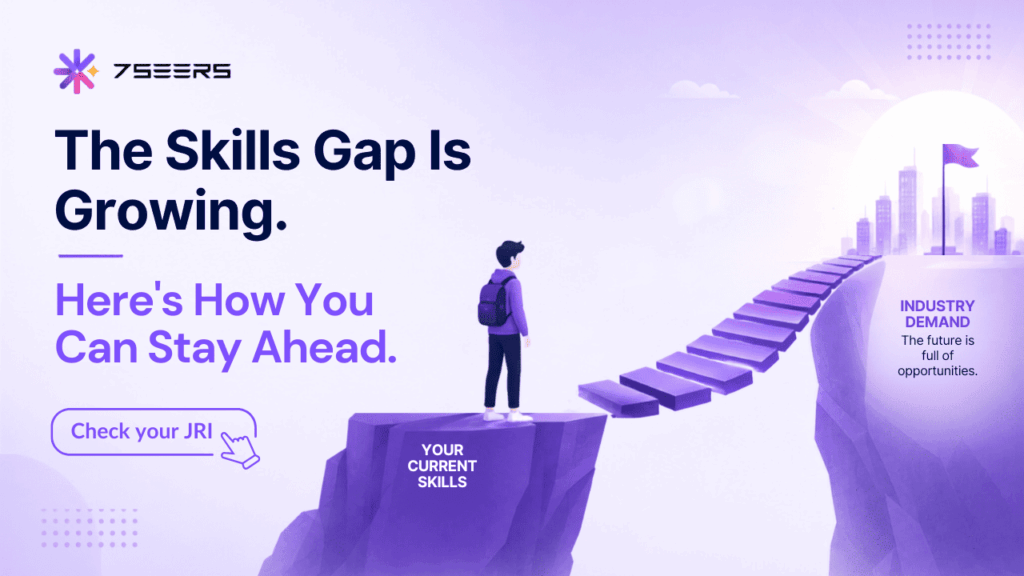
The Skills Gap Is Growing. Here’s How You Can Stay Ahead.

Every year, millions of students graduate with degrees. Yet employers continue to report that finding job-ready talent is becoming increasingly difficult. The problem isn’t a lack of graduates. It’s the growing gap between what students learn and what the workplace actually demands. The real challenge today is no longer earning a degree; it’s building the right set of skills that help you stay ahead in an increasingly competitive job market. Artificial intelligence is changing how businesses operate. Tasks that once took hours can now be completed in minutes using AI-powered tools. While technology is creating exciting opportunities, it is also changing what employers expect from fresh graduates. Companies are now looking beyond academic scores and focusing on candidates who can think critically, communicate effectively, solve problems, and continuously learn. According to the World Economic Forum’s Future of Jobs Report 2025, nearly 39% of workers’ core skills are expected to change by 2030, making continuous upskilling one of the biggest priorities for both students and professionals. This means one thing: learning cannot stop at graduation. Bridging the skills gap is no longer a one-time task. As industries evolve and technology advances, students who consistently develop new skills will always stay ahead of those who rely solely on classroom education. The future doesn’t belong to those with the most degrees. It belongs to those who never stop learning. What Is the Skills Gap? The term “skills gap” refers to the difference between what students learn during their education and what employers expect from them in the workplace. Universities provide students with theoretical knowledge, subject expertise, and academic foundations. However, employers are looking for something beyond textbooks. They want candidates who can communicate ideas clearly, collaborate with teams, solve real-world business problems, adapt to new technologies, and contribute from day one. This doesn’t mean academic learning has become less valuable. Instead, it highlights an important reality: academic knowledge and workplace readiness are two different things. Think about it this way. A student may score exceptionally well in examinations but struggle to explain an idea during an interview. Another student might understand programming concepts but have never worked on a live project. Someone may know marketing theories but have never built a LinkedIn profile or run a digital campaign. These are exactly the gaps employers notice during recruitment. Today’s workplace rewards students who know how to apply their knowledge, not just those who possess it. Academic Learning Builds Knowledge. Workplace Skills Build Careers. One of the biggest misconceptions among students is that good grades automatically lead to good jobs. While academic performance certainly matters, recruiters increasingly evaluate candidates based on their ability to perform in practical situations. ACADEMIC LEARNING WORKPLACE READINESS Academic learning helps students:Understand conceptsBuild technical foundationsDevelop subject knowledgeComplete coursework and examinations Workplace readiness, however, requires students to develop the following:Communication skillsCritical thinkingProblem-solving abilityTeamworkLeadershipAdaptabilityDigital literacyAI literacy The best professionals combine both; they understand concepts and know how to apply them. This is exactly why companies have started talking more about employability than qualifications. Why Companies Are Focusing on Skills First Hiring has changed dramatically over the last few years. Whether it’s a startup, an IT company, a fintech firm, an EV manufacturer, or a global enterprise, employers are increasingly moving towards skills-first hiring. Instead of asking only, “Which college did you graduate from?” Recruiters are now asking, “What projects have you worked on?” “Have you completed internships?” “Can you demonstrate your problem-solving skills?” Students who have worked on real-world projects, completed internships, built portfolios, participated in hackathons, and continuously improved themselves often stand out more than candidates who rely solely on academic achievements. Technical skills can always be taught. But qualities like curiosity, adaptability, leadership, resilience, and communication are much harder to develop, and that’s exactly why employers value them so highly. Why Students Should Care About the Skills Gap The competition isn’t just increasing. It’s evolving on a daily basis. Today’s graduates are not only competing with their classmates. They’re competing with students across the country and, increasingly, with professionals who are constantly upskilling through online learning, certifications, and practical experience. At the same time, AI is automating repetitive and predictable tasks across industries. While fears that “AI will replace everyone” are exaggerated, one thing is certain: AI will replace some tasks. People who know how to work with AI will replace those who don’t. This makes employability more important than ever. Students need to ask themselves: The answers to these questions often determine how prepared someone is for placements. Why the Skills Gap Is Growing Faster Than Ever The skills gap didn’t appear overnight. Several major changes are widening it every year. Technology Is Moving Faster Than Curriculums Artificial intelligence, cloud computing, cybersecurity, data analytics, automation, and Generative AI are transforming industries at an incredible pace. Educational institutions continuously update their curricula, but the speed of technological change often means industry practices evolve faster than academic programs. As a result, many students graduate with strong theoretical knowledge but limited exposure to the tools and technologies employers currently use. This is exactly why practical learning has become just as important as classroom learning. The education landscape itself is evolving rapidly to address these changes. New teaching approaches are increasingly integrating AI, experiential learning, and real-world problem solving into the classroom. If you’re interested in how learning is changing alongside technology, read our blog onInnovative Teaching Methods in the Age of AI where we explore how institutions are preparing students for the future. Employers Expect Practical Experience Gone are the days when employers hired solely based on academic qualifications. Today’s interviews often revolve around practical questions: “Tell us about a project you’re proud of.” “Describe a challenge you solved.” “How would you approach this real business problem?” Students who have participated in internships, live projects, industry visits, hackathons, or AI mock interviews naturally perform better because they’ve experienced situations beyond textbooks. Experience builds confidence → Confidence improves performance → Performance leads to better career opportunities. How Students Can Stay Ahead of the

skill-to-job-mapping-placement-readiness.
Blogs

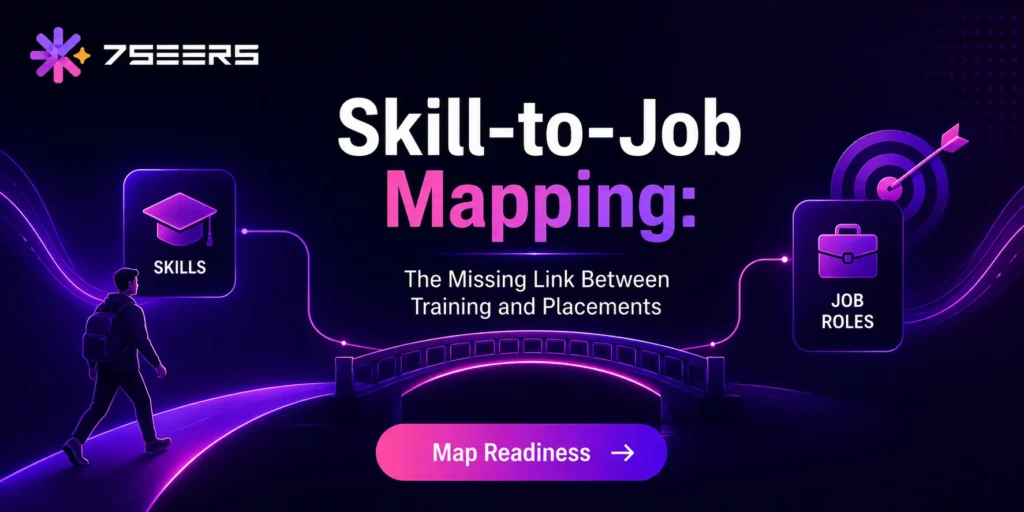
Skill-to-Job Mapping: The Missing Link Between Training and Placements 

Every year, colleges invest significant time and resources into aptitude training, coding programs, communication workshops, and certification courses.  Students attend the sessions.  Training reports show completion rates.  Yet when placement season begins, a familiar question emerges:  The answer often lies in skill-to-job mapping, which helps institutions understand whether training efforts are actually translating into job readiness. Who is actually ready for the jobs recruiters are offering?  This gap exists because most institutions measure training participation, not job readiness.  The solution lies in Skill-to-Job Mapping.  Institutions are increasingly complementing this approach with frameworks such as the Job Readiness Index (JRI) to measure overall readiness. What is Skill-to-Job Mapping?  Skill-to-Job Mapping is the process of connecting the skills students possess with the skills required for specific job roles.  Instead of asking:  “Did students complete the training?”  Institutions can ask:  “Are students ready for the roles they want to apply for?”  This shifts the focus from activity tracking to employability outcomes. Increasingly, job readiness is becoming the new metric of institutional success for colleges and universities. The Problem with Traditional Training Models  Most colleges operate with a one-size-fits-all approach:  The result?  By the time these gaps become visible, corrective action is often too late.  How Skill-to-Job Mapping Changes the Game  Imagine a student targeting a Software Development role.  Instead of simply completing training modules, the student can see:  Now multiply this visibility across an entire graduating batch.  Placement teams can instantly identify:  Benefits for Placement Teams  1. Better Placement Forecasting  Know how many students are genuinely prepared for specific roles before placement drives begin.  2. Targeted Interventions  Instead of training everyone the same way, focus efforts where skill gaps actually exist.  3. Recruiter Confidence  Present recruiter-ready talent pools backed by measurable readiness indicators.  4. Data-Driven Decision Making  Move beyond attendance reports and evaluate training effectiveness through readiness outcomes.  Modern placement strategies increasingly rely on employability analytics rather than participation metrics. 5. Improved Student Outcomes  Students gain clarity on what employers expect and what they need to improve.  From Skills to Employability  The future of placements is not about conducting more training sessions.  It’s about understanding whether training translates into employable skills.  This shift from training activity to workforce readiness is changing how institutions approach placements. Colleges that can continuously map skills to job roles gain a significant advantage:  The Way Forward  In today’s job market, employers hire for specific competencies—not just degrees.  Institutions need visibility into how student skills align with industry expectations.  Skill-to-Job Mapping bridges the gap between learning and employment, helping colleges answer the questions that matter most:  Because successful placements start long before the recruiter arrives.  About 7Seers  7Seers helps institutions measure job readiness, identify skill gaps, and map students to career opportunities through AI-powered assessments and readiness insights—enabling colleges to make placement decisions with confidence. 

Blogs

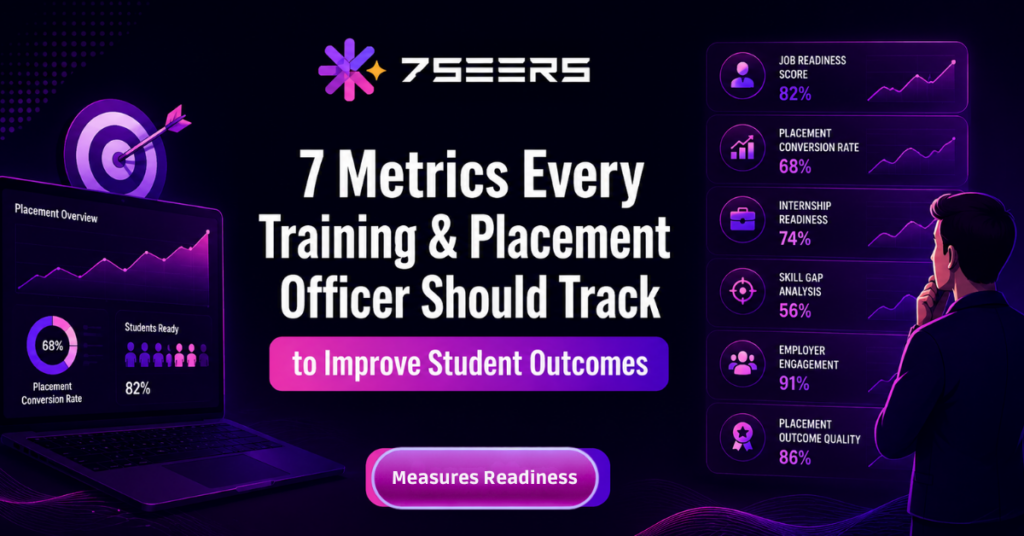
7 Training and Placement Metrics Every TPO Should Track to Improve Student Outcomes

Placements Are Not Won During Placement Season  Every Training & Placement Officer knows the feeling.  A major recruiter is scheduled to visit campus in two weeks. Students are attending last-minute aptitude sessions. Mock interviews are being rushed. Faculty members are coordinating schedules. Everyone is working toward the same goal: helping students secure opportunities.  But when the results arrive, the questions begin.  The answer often lies in the training and placement metrics institutions track long before recruiters arrive on campus. Why did some students perform exceptionally well while others struggled?  Why did technically strong candidates get rejected?  Why did only a fraction of interviewees convert into offers?  And perhaps the most important question: Could we have seen this coming earlier?  The reality is that placements aren’t won during placement season. They’re won months—sometimes years—before recruiters step onto campus.  The institutions consistently delivering strong placement outcomes are no longer relying solely on final placement numbers to measure success. Instead, they’re tracking the indicators that influence placement outcomes long before interviews begin.  Just as businesses rely on data to make decisions, placement teams need visibility into student readiness, skill gaps, employer engagement, and training effectiveness.  Because when you measure the right things, you can improve them.  Here are seven metrics every Training & Placement Officer should track to build a more effective, data-driven placement strategy.  1. Job Readiness Score: The Foundation of Placement Success  Imagine walking into placement season without knowing which students are actually prepared for interviews.  Unfortunately, that’s the reality for many institutions.  A student may have a strong academic record but struggle with communication. Another may be technically sound but lack confidence during interviews. Some students may be highly employable but unaware of how to present themselves professionally.  This is where a Job Readiness Score becomes invaluable.  Many institutions are now adopting frameworks such as the Job Readiness Index (JRI) to measure readiness before placement season. Rather than evaluating students on a single factor, a readiness score provides a comprehensive picture of employability by assessing areas such as:  Think of it as a health check-up for employability.  Instead of discovering weaknesses when a recruiter points them out, colleges can identify and address them much earlier.  Why It Matters  Without a readiness benchmark, placement efforts often become generic.  With a readiness score, placement teams can:  Most importantly, they can move from guessing who is ready to actually knowing.  2. Placement Conversion Rate: The Metric That Reveals the Real Story  Many institutions proudly share the number of students who participated in placement drives.  But participation doesn’t equal success.  A more meaningful metric is Placement Conversion Rate—the percentage of students who successfully convert interviews into offers.  Formula  Placement Conversion Rate = Offers Received ÷ Students Interviewed × 100  Let’s say:  The conversion rate would be 30%.  Now imagine another institution where only 250 students attended interviews but 125 secured offers.  Their conversion rate is 50%.  Which placement strategy appears more effective?  Exactly.  Why It Matters  Conversion rates reveal hidden insights about:  When tracked consistently, this metric helps TPOs identify patterns and improve future outcomes.  3. Internship Readiness: Because Careers Often Start Before Graduation  The traditional pathway from college to job is changing.  Today, internships have become one of the strongest gateways to employment.  Many organizations use internships as extended evaluation periods before offering full-time roles.  In fact, students who perform well during internships often receive Pre-Placement Offers (PPOs), giving them a significant advantage before placement season even begins.  The challenge?  Many students treat internships casually, while employers view them as auditions for future roles.  What Should Be Measured?  Internship readiness can include:  Why It Matters  A student who is internship-ready is often closer to being job-ready.  Tracking this metric helps institutions prepare students not just for interviews but for actual workplace success.  4. Skill Gap Analysis: Finding Problems Before Recruiters Do  Every recruiter looks for a combination of technical and professional skills.  The problem is that colleges often discover skill gaps only after students start getting rejected.  By then, valuable opportunities may already be lost.  Skill Gap Analysis helps placement teams compare student capabilities against industry expectations.  For example:  A software company may expect:  A student may possess strong coding skills but struggle during collaborative discussions.  Without visibility into these gaps, training efforts can miss the mark.  Why It Matters  Skill gap data enables institutions to:  Instead of offering ten generic workshops, colleges can deliver three targeted interventions that address actual needs.  5. Placement Readiness Progress Rate: Is Training Actually Working?  Institutions invest significant time and resources into training programs.  Aptitude sessions.  Soft skills workshops.  Interview preparation bootcamps.  Industry certifications.  But here’s the question:  How do you know if they’re making a difference?  This is where Placement Readiness Progress Rate becomes important.  Rather than measuring participation, it measures improvement.  For example:  This indicates meaningful growth.  Why It Matters  Tracking progress allows TPOs to:  Data-backed improvement is far more valuable than attendance records.  6. Employer Engagement & Repeat Recruiter Rate  One of the strongest indicators of placement quality isn’t student-related at all.  It’s employer behaviour.  When recruiters repeatedly return to a campus, they’re sending a message:  “We found talent worth hiring.”  Repeat Recruiter Rate measures how many employers choose to return year after year.  Why It Matters  Returning recruiters often indicate:  Building employer relationships is expensive and time-consuming.  Retaining those relationships is significantly more valuable.  For TPOs, this metric provides direct feedback from the market itself.  7. Placement Outcome Quality: Looking Beyond Placement Percentage  Placement percentage is important.  But it doesn’t tell the complete story.  Consider these two scenarios:  Institution A  Institution B  Which institution is delivering stronger long-term outcomes?  Most would choose Institution B.  That’s why placement teams should also track:  Why It Matters  Students aren’t just looking for jobs.  They’re looking for careers.  Tracking quality helps institutions align placements with long-term student success.  The Shift Every Placement Team Needs to Make  Traditionally, placement teams have focused on outcome metrics:  While these remain important, they are lagging indicators.  They tell you what happened. 

Scroll to Top