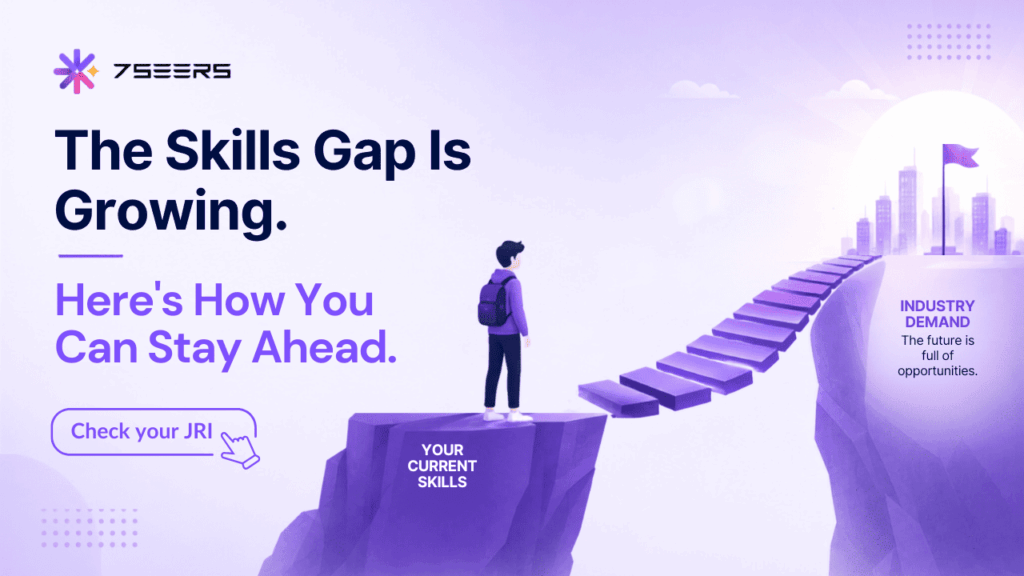
The Skills Gap Is Growing. Here’s How You Can Stay Ahead.
Every year, millions of students graduate with degrees. Yet employers continue to report that finding job-ready talent is becoming increasingly difficult. The problem isn’t a lack of graduates. It’s the growing gap between what students learn and what the workplace actually demands. The real challenge today is no longer earning a degree; it’s building the right set of skills that help you stay ahead in an increasingly competitive job market. Artificial intelligence is changing how businesses operate. Tasks that once took hours can now be completed in minutes using AI-powered tools. While technology is creating exciting opportunities, it is also changing what employers expect from fresh graduates. Companies are now looking beyond academic scores and focusing on candidates who can think critically, communicate effectively, solve problems, and continuously learn. According to the World Economic Forum’s Future of Jobs Report 2025, nearly 39% of workers’ core skills are expected to change by 2030, making continuous upskilling one of the biggest priorities for both students and professionals. This means one thing: learning cannot stop at graduation. Bridging the skills gap is no longer a one-time task. As industries evolve and technology advances, students who consistently develop new skills will always stay ahead of those who rely solely on classroom education. The future doesn’t belong to those with the most degrees. It belongs to those who never stop learning. What Is the Skills Gap? The term “skills gap” refers to the difference between what students learn during their education and what employers expect from them in the workplace. Universities provide students with theoretical knowledge, subject expertise, and academic foundations. However, employers are looking for something beyond textbooks. They want candidates who can communicate ideas clearly, collaborate with teams, solve real-world business problems, adapt to new technologies, and contribute from day one. This doesn’t mean academic learning has become less valuable. Instead, it highlights an important reality: academic knowledge and workplace readiness are two different things. Think about it this way. A student may score exceptionally well in examinations but struggle to explain an idea during an interview. Another student might understand programming concepts but have never worked on a live project. Someone may know marketing theories but have never built a LinkedIn profile or run a digital campaign. These are exactly the gaps employers notice during recruitment. Today’s workplace rewards students who know how to apply their knowledge, not just those who possess it. Academic Learning Builds Knowledge. Workplace Skills Build Careers. One of the biggest misconceptions among students is that good grades automatically lead to good jobs. While academic performance certainly matters, recruiters increasingly evaluate candidates based on their ability to perform in practical situations. ACADEMIC LEARNING WORKPLACE READINESS Academic learning helps students:Understand conceptsBuild technical foundationsDevelop subject knowledgeComplete coursework and examinations Workplace readiness, however, requires students to develop the following:Communication skillsCritical thinkingProblem-solving abilityTeamworkLeadershipAdaptabilityDigital literacyAI literacy The best professionals combine both; they understand concepts and know how to apply them. This is exactly why companies have started talking more about employability than qualifications. Why Companies Are Focusing on Skills First Hiring has changed dramatically over the last few years. Whether it’s a startup, an IT company, a fintech firm, an EV manufacturer, or a global enterprise, employers are increasingly moving towards skills-first hiring. Instead of asking only, “Which college did you graduate from?” Recruiters are now asking, “What projects have you worked on?” “Have you completed internships?” “Can you demonstrate your problem-solving skills?” Students who have worked on real-world projects, completed internships, built portfolios, participated in hackathons, and continuously improved themselves often stand out more than candidates who rely solely on academic achievements. Technical skills can always be taught. But qualities like curiosity, adaptability, leadership, resilience, and communication are much harder to develop, and that’s exactly why employers value them so highly. Why Students Should Care About the Skills Gap The competition isn’t just increasing. It’s evolving on a daily basis. Today’s graduates are not only competing with their classmates. They’re competing with students across the country and, increasingly, with professionals who are constantly upskilling through online learning, certifications, and practical experience. At the same time, AI is automating repetitive and predictable tasks across industries. While fears that “AI will replace everyone” are exaggerated, one thing is certain: AI will replace some tasks. People who know how to work with AI will replace those who don’t. This makes employability more important than ever. Students need to ask themselves: The answers to these questions often determine how prepared someone is for placements. Why the Skills Gap Is Growing Faster Than Ever The skills gap didn’t appear overnight. Several major changes are widening it every year. Technology Is Moving Faster Than Curriculums Artificial intelligence, cloud computing, cybersecurity, data analytics, automation, and Generative AI are transforming industries at an incredible pace. Educational institutions continuously update their curricula, but the speed of technological change often means industry practices evolve faster than academic programs. As a result, many students graduate with strong theoretical knowledge but limited exposure to the tools and technologies employers currently use. This is exactly why practical learning has become just as important as classroom learning. The education landscape itself is evolving rapidly to address these changes. New teaching approaches are increasingly integrating AI, experiential learning, and real-world problem solving into the classroom. If you’re interested in how learning is changing alongside technology, read our blog onInnovative Teaching Methods in the Age of AI where we explore how institutions are preparing students for the future. Employers Expect Practical Experience Gone are the days when employers hired solely based on academic qualifications. Today’s interviews often revolve around practical questions: “Tell us about a project you’re proud of.” “Describe a challenge you solved.” “How would you approach this real business problem?” Students who have participated in internships, live projects, industry visits, hackathons, or AI mock interviews naturally perform better because they’ve experienced situations beyond textbooks. Experience builds confidence → Confidence improves performance → Performance leads to better career opportunities. How Students Can Stay Ahead of the