Accredition in Job readiness
Blogs

Why Job Readiness Is the New Metric of Institutional Success? 

Today, a degree alone no longer guarantees a career. What matters is whether students are job-ready—equipped not only with theoretical knowledge but also with the skills, behaviors, and mindset to meet industry expectations from day one.  As employers look beyond academic scores, job readiness in higher education has emerged as a key performance indicator for institutions. From curriculum design to teaching methodologies, everything is being re-evaluated to ensure alignment with market realities.  But how can institutions deliver on this new expectation?  The Reality: A Persistent Skill Gap in Higher Education  Despite a rise in graduation rates, a large percentage of students struggle to find relevant employment. This reflects a skill gap in higher education—a disconnect between what’s taught and what’s demanded by employers.  The gap isn’t just technical. Communication, critical thinking, adaptability, and real-world exposure are areas where students often fall short. This mismatch hampers graduate employability metrics, impacting both the individual and the institution’s standing in rankings and reputation.  Enter 7Seers: Your Partner in Job-Ready Transformation  7Seers is not just an EdTech platform—it’s an AI-powered education transformation solution that redefines how institutions prepare students for the future.  Here’s how 7Seers helps build future-ready curriculum design –  1. AI in Education for Personalized Learning Paths  Every student learns differently. 7Seers uses AI-driven learning outcomes and predictive analytics in education to customize learning journeys. Based on individual performance, learning style, and career goals, it recommends content, projects, and skill development tracks to maximize engagement and results.  2. Skill Mapping and Employability Tracking  Institutions can now track real-time progress on graduate employability metrics. Through skill assessments, internship readiness indicators, and placement outcomes, educators get actionable data to fine-tune programs.  3. AI-Powered Career Guidance Tools  Students receive intelligent suggestions for potential career paths based on their interests, strengths, and market trends. These AI-powered career guidance tools go beyond generic counselling, offering data-backed recommendations tailored to each learner.  4. Strengthening Industry-Academia Collaboration  7Seers enables deeper partnerships between academia and industry through:  This ensures students gain relevant exposure and hands-on experience that reflects real-world scenarios.  Institutions That Prioritize Job Readiness Will Lead  With job readiness now central to student success, accreditation, and rankings, it’s no longer optional. It’s strategic.  7Seers empowers institutions to embed future-ready learning into their DNA—delivering outcomes that matter to students, employers, and society at large.  Let’s redefine success—one job-ready graduate at a time. 
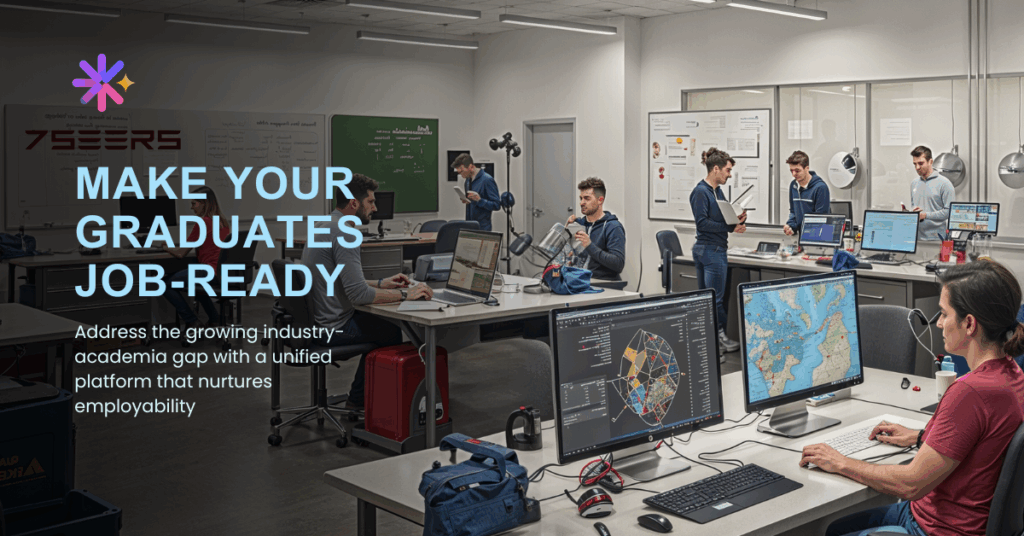
Students using 7Seers platform in a smart classroom with real-time job readiness tools, bridging the industry-academia gap
Blogs

Empowering Educational Ecosystems: The Need for Job-Ready Graduates 

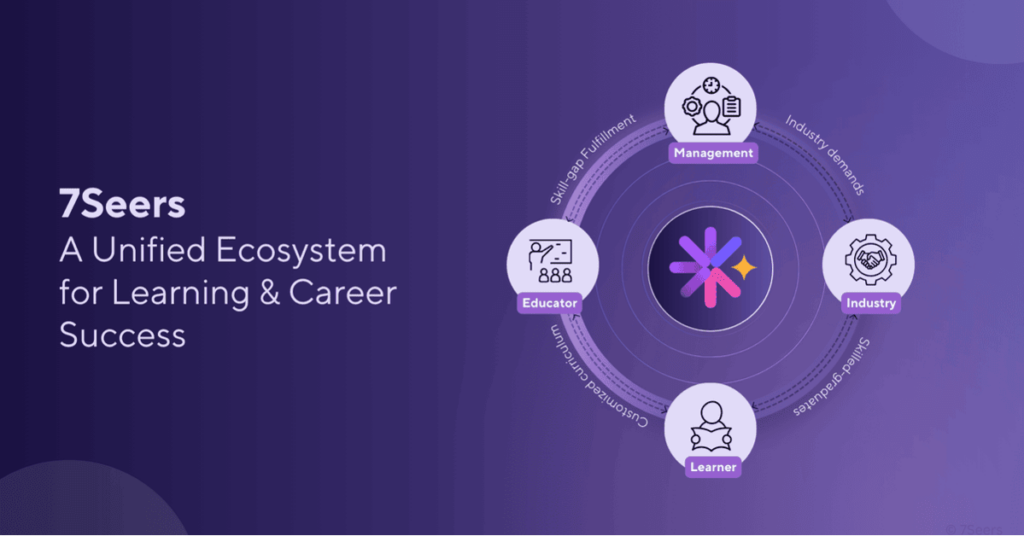
The transition from classroom learning to corporate readiness is no longer a luxury—it’s a necessity. According to the World Economic Forum, over 50% of all employees will need reskilling by 2025. Meanwhile, more than 85 million jobs may go unfilled by 2030 due to a lack of skilled talent (Korn Ferry).  Are educational institutions truly ready to bridge this gap?  This is where 7Seers steps in. It’s not just a product—it’s a movement to align academia with industry expectations by empowering all stakeholders: students, teachers, Training & Placement Officers (TPOs), and administrators.  For Students: AI-Driven Career Preparation Starts Early  Classroom lectures alone can’t prepare students for interviews, projects, or performance in real-time work environments. Here’s what 7Seers offers:  For Teachers: Support for Creating Industry-Driven Classrooms  Teaching is no longer limited to just academic books. Educators need to mentor students for real-world jobs.  For Training & Placement Officers: From Manual Tracking to Smart Operations  With hiring trends changing rapidly, institutions must equip TPOs with tools for real-time decision-making.  Why Institutions Trust 7Seers?  Because it’s more than a digital portal—it’s a strategic transformation partner.  Global Snapshot: Why This Change is Urgent  Conclusion:  Educational institutions have a new mandate—not just to teach, but to transform.  Platforms like 7Seers make this shift possible—by empowering every stakeholder with intelligent tools, real-time data, and outcome-based guidance.  The question is: Is your institution ready for the change? 

7Seers unified career readiness and placement platform for colleges"
Blogs

Is Your Campus Really Job-Ready? Let’s Find Out

You’re a student, a teacher, a TPO, or part of the academic leadership team. You’re invested in outcomes. But let’s ask the hard question:  Is your institution truly preparing students for what comes after graduation?  All check out. But here’s what’s often missing:  Now let’s flip the script.  What if there was one unified platform that powered all of this—and it’s already transforming campuses across the country?  Meet 7Seers—a platform that aligns every stakeholder in your education ecosystem to one goal: making students job-ready before they leave campus.  Let’s walk through it, stakeholder by stakeholder.  Student: “I need more than just lectures. I need real-world prep.”  You want to land that job—but you’re stuck between theory-heavy classes and scattered prep resources. What if you had one place that did it all?  With 7Seers, you get –  Your Outcome – Not just prepared. Prepared smartly, specifically, and confidently.  Teacher: “I teach—but how do I align with industry trends?”  Let’s test this –  With 7Seers, now you can –  Your Outcome – You become a career coach, not just a curriculum expert.  Training and Placement Officer: “Too many moving parts. Not enough visibility.”  Let’s simulate your current process. You’re juggling resumes, interviews, company data, training sessions, student follow-ups… sound familiar?  Now think of this –  You’re no longer managing placements. You’re managing predictive employability.  Your Outcome – Smarter placements. Less challenges. More conversions.  Institutional Leadership: “How do we stand out?”  Here’s what 7Seers can bring for your institution –  Your Outcome – Become a next-gen institution that delivers outcomes, not just infrastructure.  Let’s Recap—Quick Quiz Time –  Which of these do you currently have in place?  If you ticked fewer than four—your institution needs 7Seers.  Every student deserves a smart, guided path to employment. Every institution deserves tools that make that path possible.   That’s 7Seers.  Want to see how it fits your campus? Request a live walkthrough or connect with our onboarding team. 

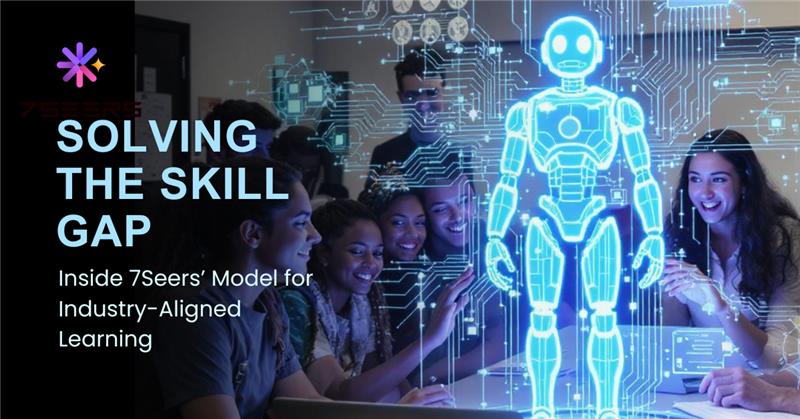
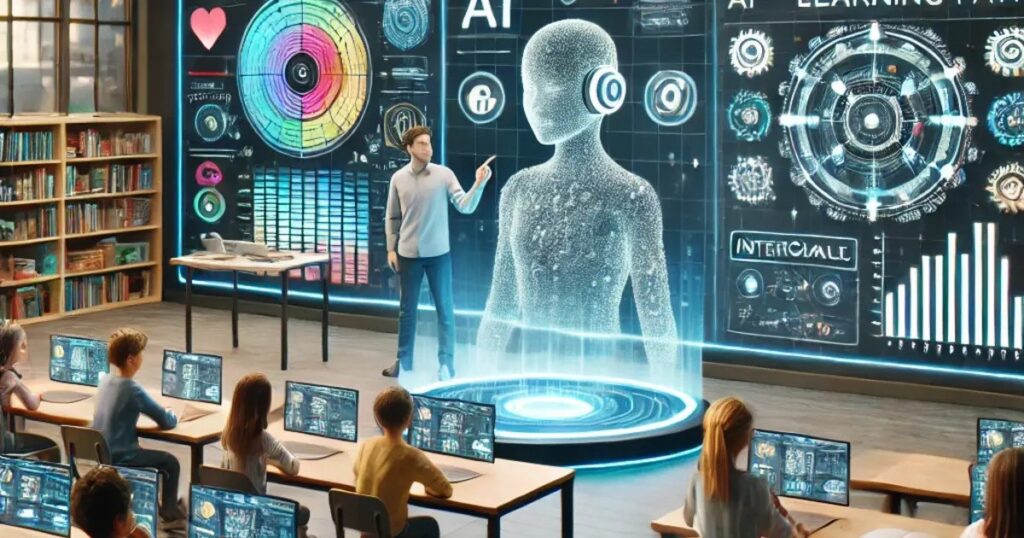
Students interacting with a digital robot hologram, representing 7Seers' AI-driven approach to solving the industry skill gap through aligned learning models
Blogs

Bridging the Gap – How 7Seers is Empowering Students for Industry-Ready Careers? 

A student spends four years earning a degree, aces every exam, and graduates at the top of their class—only to freeze in a job interview when asked about a real-world case study or hands-on experience. Sound familiar?  This isn’t just one person’s story. It’s a widespread reality for millions of students navigating today’s career landscape. The disconnect between classroom learning and industry expectations has never been more stark.  While industries are advancing with AI, data science, sustainability, and innovation, students are still being tested on memorization and theory. Employers are hunting for critical thinkers, communicators, and problem-solvers. But how do you train for that when your textbooks haven’t changed in a decade?  That’s the gap 7Seers is built to close.  7Seers isn’t just another digital platform—it’s an intelligent student ecosystem designed to prepare, guide, and propel students toward future-ready careers. With personalized learning paths, resume-building tools, industry exposure, and AI-powered interview prep, it puts every student in control of their journey—from the classroom to the boardroom.  The Real-World Challenges Facing Students Today  1. Outdated Curriculum vs. Emerging Industry Needs Students often learn theoretical concepts that have limited practical application. Industry, on the other hand, demands adaptability, hands-on skills, and real-time problem-solving. This mismatch leads to a skills gap that hurts employability.  2. One-Size-Fits-All Learning Approach Each student learns differently, yet the current academic system treats them the same. Lack of personalization in education results in disengagement and underperformance.  3. Lack of Industry Exposure & Soft Skills Even the brightest students struggle with job interviews or building compelling resumes because they’ve had little exposure to actual workplace expectations, communication styles, or role-specific competencies.  4. Inadequate Career Guidance Students often make career choices based on societal pressure or guesswork rather than data-backed insights or personalized aptitude analysis.  7Seers: The Game-Changer for Modern-Day Students  7Seers is not just a product; it’s a digital learning revolution. Designed to prepare students beyond academics, it empowers them with AI-driven, personalized learning paths and career readiness tools that speak directly to the demands of the current industry landscape.  Key Features Tailored for Student Empowerment  1. Personalized Learning Paths  7Seers evaluates a student’s strengths, learning style, and aspirations to design tailored learning journeys.  2. Real-World Project Integration  Theory meets practice. Students gain hands-on exposure through simulated projects, live industry case studies, and real-world problem statements.  3. Interview Readiness and Soft Skill Training  Beyond technical skills, 7Seers prepares students to communicate with confidence and think critically.  4. AI-Powered Resume Builder & Job Mapping  Students can now build a resume not just for today—but for the career path they’re aiming for.  5. Industry-Integrated Assessments  With assessments created in collaboration with industry partners, students are evaluated on what really matters in hiring—problem-solving, agility, digital fluency, and innovation mindset.  How It All Comes Together  Meet Aarav, a third-year engineering student who’s unsure about his future in tech. Through 7Seers:  Aarav’s story isn’t unique. It’s what happens when students are empowered with the right tools, insights, and support systems—and that’s what 7Seers is committed to doing.  Conclusion:  The future of education lies in personalization, practicality, and purpose. 7Seers combines all three to ensure that students don’t just graduate—they thrive in their chosen careers.  If you’re a student looking to take control of your future or an institution looking to empower the next generation of industry leaders, it’s time to explore how 7Seers can be your gateway to readiness, relevance, and results. 

Innovative Teaching Methods in the Age of AI
Blogs

Innovative Teaching Methods in the Age of AI

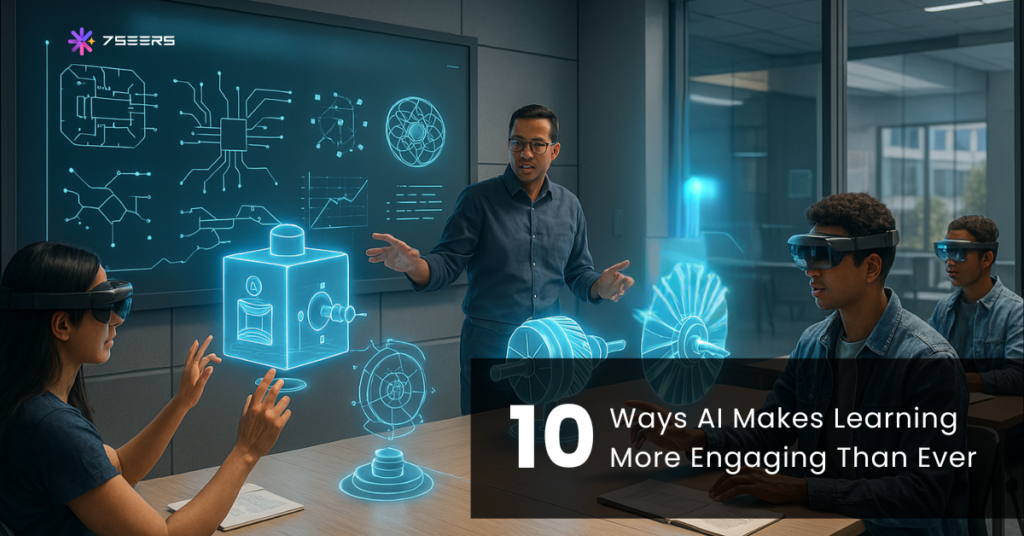
Every educator envisions an ideal classroom—one where students are actively engaged, learning deeply, and applying their knowledge meaningfully. Today, this vision is more attainable than ever, thanks to the rapid advancement of artificial intelligence in education. In the age of AI, teaching is evolving from content delivery to engagement engineering. Innovative methods—collaborative projects, immersive experiences, and personalized feedback—can now be scaled efficiently using AI tools. What once required hours of preparation and coordination can now be generated, adapted, and deployed with just a few thoughtful prompts. Let’s explore some innovative teaching strategies—and how AI is making each one easier, smarter, and more impactful in higher education classrooms. Adaptive Learning What it is: Personalized instruction tailored to each student’s pace and understanding. AI in action (Higher Ed Example):In a university-level calculus course, an AI-powered learning platform analyzes a student’s struggle with integration by parts. Instead of simply flagging the issue, the AI generates a customized set of exercises, provides interactive hints, and offers a short video explanation—all tailored to that student’s learning style. Meanwhile, the instructor receives analytics showing which students need intervention and what misconceptions are most common. Blended Learning What it is: A mix of traditional face-to-face instruction and online learning components. AI in action (Higher Ed Example):In a pharmacology course, students attend lectures twice a week and complete AI-generated simulations online that let them “test” virtual patients. These simulations adapt in real time, creating new drug interaction scenarios based on previous responses. The professor then uses this data in class to discuss decision-making patterns and common errors. Flipped Classroom What it is: Students study content at home and use class time for application and problem-solving. AI in action (Higher Ed Example):In a mechanical engineering class, students watch AI-curated video lectures at home—each personalized to their knowledge level. The AI quiz at the end of each video diagnoses gaps and suggests review material. In the classroom, the instructor sees a dashboard highlighting who’s ready for advanced tasks and who needs additional support, making class time more efficient and targeted. Active Learning What it is: Learning by doing—through participation, discussion, and exploration. AI in action (Higher Ed Example):In a world literature course, students are asked to analyze the moral dilemmas faced by characters in classic texts. The AI generates fictional debates between authors or characters using natural language models. Students work in groups to critique the AI’s dialogue, rewrite parts, and perform the debate in class—deepening their understanding of character motivation and historical context. Project-Based Learning What it is: Students tackle real-world challenges through long-term, hands-on projects. AI in action (Higher Ed Example):In a business analytics program, students are tasked with developing a go-to-market strategy for a sustainable product. They use AI to: Collaborative Learning What it is: Students work in groups to achieve shared learning goals. AI in action (Higher Ed Example):In a psychology course, students are divided into groups to evaluate a fictional case study. The AI generates unique patient profiles for each group, varying in symptoms, background, and history. Students collaborate to assess, diagnose, and propose treatment plans, then compare outcomes across groups, revealing biases or inconsistencies in reasoning. Peer Teaching and Feedback What it is: Students explain concepts to one another and provide feedback. AI in action (Higher Ed Example):In a computer science capstone project, students present their code to peers. AI tools evaluate the code for efficiency, readability, and security and suggest feedback templates. Students combine AI-generated insights with their observations to provide structured, thoughtful critiques, improving both communication and coding skills. Crossover Teaching What it is: Interdisciplinary teaching that connects concepts across subjects. AI in action (Higher Ed Example):In a joint architecture and environmental science course, AI helps students model buildings with energy efficiency in mind. The AI not only suggests sustainable design ideas but pulls in data from climate simulations and material science to show real-world impact. Students then present interdisciplinary proposals that are both creative and evidence-based. Gamification What it is: Using game elements to increase engagement and motivation. AI in action (Higher Ed Example):In a medical microbiology course, students earn points for completing AI-generated clinical challenges. Each case builds on the previous, and the AI adjusts complexity based on student accuracy and speed. Leaderboards, badges, and bonus challenges keep engagement high without compromising rigor. Immersive VR and 3D Learning What it is: Using virtual or augmented reality to simulate experiences and environments. AI in action (Higher Ed Example):In a civil engineering lab, students wear VR headsets to enter a construction site simulation. They inspect virtual bridges, test load-bearing limits, and troubleshoot design flaws. The AI adapts to the environment based on student decisions and offers real-time feedback, helping them learn complex spatial reasoning and design dynamics in a risk-free setting. 🔧 Tips for Implementing AI-Powered Teaching Innovation Final Thoughts AI isn’t replacing educators—it’s empowering them to do what they do best: inspire, engage, and guide. By embracing innovative teaching strategies and thoughtfully integrating AI tools, educators can unlock new dimensions of learning, creativity, and collaboration. The age of AI is not a challenge to teaching—it’s an invitation to reimagine it.

5 Ways how AI is Transforming Education Worldwide
Blogs

5 Ways AI is Transforming Education Worldwide

Old vs. New: Is Our Education System Keeping Up with the World? For centuries, education has followed a standardized model—a system where students learn at the same pace, in the same way, regardless of their unique abilities or interests. This traditional approach has shaped millions of minds but has also created gaps between education and real-world skills. With the rapid advancement of technology, AI, and global digital transformation, education needs to evolve. Countries like Finland, Singapore, and the U.S. are already adopting flexible, skills-based, and AI-driven education models, whereas India and other developing nations are still in transition. Let’s take a closer look at how the old education system compares to today’s evolving learning ecosystems. Old vs. New: A Global Shift in Education Aspect Traditional Education (Old) Modern Learning Ecosystem (New – 7Seers Approach) Teaching Method One-size-fits-all, rote learning Adaptive, personalized learning paths using AI Focus Memorization, theoretical knowledge Skill-based, real-world application Student Engagement Passive learning (lectures, textbooks) Interactive learning (gamification, simulations, projects) Assessment System Standardized exams, marks-based Continuous assessment, competency-based evaluation Technology Integration Minimal, mostly classroom-based AI, digital platforms, virtual learning, immersive experiences Industry Readiness Limited, outdated curriculum Industry-academia collaboration, real-world skills Access to Learning Geographically limited, classroom-dependent Anytime, anywhere, digital-first education Feedback Mechanism Delayed, general feedback Real-time AI-driven insights, customized learning paths The Shift in Global Education Models In India, education is still heavily dependent on traditional classrooms and standardized testing, but change is happening.Countries like Finland, Singapore, and the U.S. are leading the way with student-centric learning models, AI-driven customization, and real-world skill integration. India’s Education Evolution United States & Europe Singapore & Finland (Leading Models) Building the Future of Education with 7Seers Is Our Education System Ready for the Future? For decades, education has followed a standardized syllabi, one-size-fits-all teaching methods, and evaluation systems that focus more on memorization than actual understanding. While industries have embraced digital transformation, education has been slow to evolve, leaving students unprepared for the demands of the modern workforce. With rapid advancements in AI, automation, and global connectivity, learning needs to be more than just textbooks and lectures. It should be engaging, adaptive, and relevant to real-world applications. This is where 7Seers comes in—a revolutionary education platform designed to bridge the gap between traditional learning and industry expectations. The Vision Behind 7Seers 7Seers is built on a simple yet powerful idea –Every learner is unique. Their education should be too. Rather than forcing students into a fixed curriculum, 7Seers adapts to individual learning styles, strengths, and interests. It brings a personalized, interactive, and skill-based approach to education, ensuring students don’t just learn but truly understand, apply, and innovate. Key Features of 7Seers 1. Personalized Learning Paths Not all students learn at the same pace or in the same way. 7Seers leverages AI to assess each student’s strengths, weaknesses, and preferences. Based on this, the platform creates a customized learning journey, ensuring a more effective and enjoyable education experience. 2. Skill-Based Learning Over Memorization The modern job market values problem-solving, creativity, adaptability, and critical thinking over rote learning. 7Seers emphasizes: Students gain not just theoretical knowledge but practical skills that prepare them for careers in technology, business, healthcare, and more. 3. Interactive and Engaging Education Traditional classrooms rely on passive learning—lectures, note-taking, and exams. 7Seers introduces active learning through: By making learning an experience rather than a chore, students retain information better and develop a lifelong love for learning. 4. Industry-Academia Collaboration Education should not exist in isolation from industry needs. 7Seers bridges this gap by: This ensures students graduate not just with degrees but with real, marketable skills. 5. Insights for Educators and Management Teachers and institutions often struggle to track student progress effectively. 7Seers provides data-driven insights to help educators: With AI-driven analytics, educators can make more informed decisions and enhance student learning outcomes also management can understand the trends in real-world employment landscape to help students get job-ready. Why 7Seers Matters Now More Than Ever? The education system is at a turning point. The traditional model is no longer sufficient to prepare students for an uncertain future. With automation and AI reshaping industries, learning needs to evolve from static information consumption to dynamic, skill-driven engagement. 7Seers is not just a platform—it’s a movement towards a smarter, more adaptive, and future-ready education system. Join the Education Revolution Education should be about understanding concepts, solving problems, and thinking critically. If you’re a student, educator, or institution looking for a smarter way to learn and teach, 7Seers is the future you’ve been waiting for. What’s the one thing you would change about today’s education system? Let’s discuss.

Assessments in the Age of AI: Rethinking Evaluation for Higher Education
Blogs

Assessments in the Age of AI: Rethinking Evaluation for Higher Education | 7Seers

The Changing Landscape of Learning and Assessment Higher education has always been centered around three key pillars: creating engaging educational material, effectively disseminating it to students, and evaluating whether students have retained, absorbed, and learned correctly. However, with the rise of generative AI (GenAI) models, traditional assessment methods are facing unprecedented challenges. The Need for a New Approach The widespread availability of AI tools has made it difficult for educators to distinguish between human- and AI-generated content. Traditional assessment strategies, primarily designed for certification rather than learning outcomes, may inadvertently penalize students who complete their work without AI assistance while rewarding those who use AI to generate responses. This disrupts the integrity of the grading system, creating ethical dilemmas and practical challenges. Given the importance of the grading system and certifications in our society and jobs, the breaking down of this traditional method creates innumerable problems.  The AI-assisted grading that some tools encourage for potential student’s AI-generated content creates a situation where AI judges and assesses AI without human thinking being judged at all. Instead of viewing AI as a threat, universities must pivot toward integrating it responsibly. Given that AI will be an essential tool in nearly every profession, assessments must evolve to reflect real-world applications where AI assistance is a given. However, there is a delicate balance—over-reliance on AI could diminish critical thinking skills and problem-solving capabilities. Key Learning Outcomes in Higher Education To design AI-adapted assessments, we must first identify the fundamental learning objectives in higher education: Rethinking Assessments for the AI Era To ensure assessments remain rigorous and meaningful and to foster the key learning objectives, educators can adopt the following strategies: 1. Ground the Assessment 2. Embed AI in the Assessment 3. Use Multimedia Formats The ease of accessing AI-generated information necessitates a curricular pivot from rote memorization to process mastery.  When AI can write competent essays, we must ask: What writing skills remain essential?  Assessment Renaissance: Measuring What Matters This approach accommodates AI’s strength in information retrieval while doubling down on human analytical capabilities. Conclusion: The Future of Assessments The ease of accessing AI-generated content demands a rethinking of traditional assessments. Academic integrity ultimately depends on intent. If someone is determined to cheat, they will find a way, regardless of the technology available. Instead of viewing AI as a threat, universities should focus on educating students on its responsible use—ensuring it adds value, enhances learning, and supports intellectual growth. Give agency to students to decide the extent to which they want to use AI and be transparent about it. By integrating AI into the learning process while reinforcing human cognitive skills, educators can ensure that students develop the analytical, ethical, and problem-solving abilities necessary for success in the AI-driven world. The future of higher education assessment lies in leveraging AI as an ally and fostering a learning environment that values creativity, critical thinking, and lifelong learning.

The Future of Higher Education in the Age of AI
Blogs

The Future of Higher Education in the Age of AI | 7Seers

The landscape of education is undergoing a seismic shift, driven by the rapid advancements in artificial intelligence. Since the arrival of AI models like ChatGPT, it has become clear that AI is not just a tool but a transformative force that will redefine how we learn and teach.  The Impact of AI on Education  1. The Changing Job Market and Skill Requirements  AI is reshaping industries and, with it, the skills required to thrive in the workforce. Future jobs will necessitate working alongside AI, requiring a new set of competencies that traditional academia is struggling to keep pace with. Some key implications include:  2. Rethinking Assessment and Learning Models  Traditional assessments are becoming obsolete in the AI era. AI-generated content challenges the traditional notion of learning, making it harder to determine whether students truly understand the material. This necessitates a shift:  3. The Role of Teachers in AI-Driven Education  Teachers, like other professionals, need reskilling to integrate AI into their teaching methods effectively. The goal is not to replace educators but to enhance their capabilities:  The Four Pillars of Learning in the AI Era  Traditional education is structured around four key learning areas, which must evolve in response to AI’s impact:  The Rise of AI-Aided Pedagogy  AI presents an opportunity to revolutionize teaching methods, making learning more engaging, effective, and personalized. The future of AI-driven education must focus on:  The Future: Learning as Discovery, Not Compliance  For AI-powered education to succeed, it must cultivate curiosity over compliance, connection over content delivery, and discovery over box-checking. By leveraging AI intelligently, we can create an education system that prepares students for the future while making learning an enriching, lifelong journey.  Conclusion   AI is not just an addition to the education system—it is a paradigm shift. As the world embraces AI, higher education must evolve to prepare students for an AI-integrated future. By fostering AI literacy, updating curricula, rethinking assessments, and empowering educators, we can ensure that the next generation is equipped to thrive in this new era of intelligence. 

Scroll to Top